Good-bye to January

I’m ready for February, even though we are still in the middle of winter, it puts us a little closer to Spring.  It’s very cold here with mounds of gorgeous snow, and I did make it outside for one long walk with the dogs.  I still feel bedraggled many days and overwhelmed on other days but there is still an inching toward feeling healthy and whole again. Soup always makes me feel better!

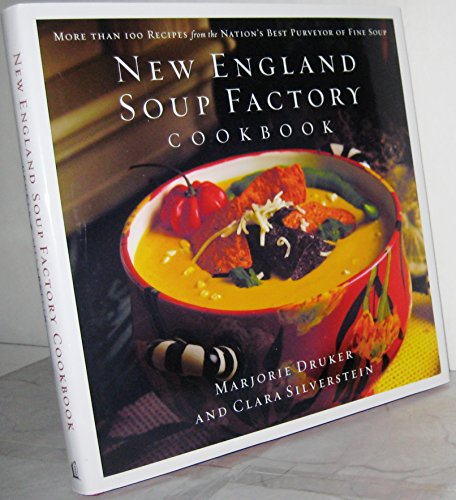
I made a delicious black bean soup from the New England Soup Factory Cookbook, a Christmas gift from my mother-in-law. This is the second soup I’ve made from the book and both recipes were easy to follow and tasted delicious. The first recipe I made a few days after Christmas and it fit the bill for how I was feeling: Spicy Chicken and Rice Flu Chaser Soup and my mother had just gifted me several local farm-raised chickens. Look at all the wonderful mothering help I’ve received! Grateful for that during this tough month. 

This black bean recipe was very easy to put together on a Saturday afternoon and even though I didn’t have any sherry in my cupboards it turned out amazing.  We added diced avocados as well because why not?

So, of course, I’ve been eating well. And reading lots in between creating major lesson plans for school. I had a library hold on The Midnight Library by Matt Haig, which I read an amazing review about and the book is short but worthy. It pokes into some philosophical ideas I’ve thought about over the last few years. The road less traveled or the road not taken…
Let’s dive into February and find ways to educate ourselves and celebrate Black history everyday through February and make it a part of who we are. 

Books give much needed insight…

Between Spring Break and Covid-19 (still happening) I’ve been doing some reading which is not something new for me but my book numbers have definitely increased. Reading books by Black authors has always been important to me. It’s like traveling or meeting new people; I appreciate learning and understanding about culture, people and places.

I prefer fiction and have learned from books like Look Both Ways by Jason Reynolds. I am appreciative of  Jacqueline Woodson, Renee Watson, Angie Thomas, Aisha Saeed, Sharon M. Draper,  Nic Stone, and Hena Khan. Mildred D. Taylor is one of my favorite authors with her Logan family series about life in segregated Mississippi. All have enlightening me on their own race experiences through fiction. There is one scene in Black Girls Must Die Exhausted by Jayne Allen that helped me feel what it was like to be approached by an officer.  I could feel her fear.  Me reading that in no way gives me the real experience yet it gave me a huge sense of the negative adrenaline rush if your driving while Black.

I am reading How to be an Anti-Racist by Ibram X. Kendi and I find it interesting to learn about the history of racism and I’m waiting on White Fragility by Robin J. DiAngelo from the library. I want to read I’m judging you by Luvvie Ajayi. Non-fiction takes me forever though like I’m still working chapter by chapter through Eat to Beat Disease-fantastic book but does not call to me in the same way.

It’s the fiction stories that fly by for me and teach me about another person’s experience.

Jerry Craft’s graphic novel New Kid: demonstrates how horrifying school can be for students of color because of teachers, administrators and students.  I am so glad this one won a Newberry Medal and hope that opens it up for more readership.

The Water Dancer by Ta-Nehisi Coates: I liked Between the world and me and thought this beautiful fiction writing was an amazing piece of magical realism that brought new depth to the time of slavery. I look forward to whatever Coates writes next.

The Marrow Thieves by Cherie Dimaline: Native dystopian about how we continue to dehumanize and hunt Indigenous people. Well-told story and I fell in love with some of the characters and wanted to read more…

I can make this promise by Christine Day: I purchased this book for school and read it right away. There are not many realistic fiction books about BIPOC and this debut book shares the difficult times today that Edie experiences through bullying, misappropriation of Native stories and artifacts and her own curiosity about her ancestors.

Genesis begins again by Alicia D. Williams: Also ordered through school and brought it home straight out of the box. This amazing debut book talks about the hard topic of skin color through the eyes of Genesis who has dark skin tone like her father and she wishes so much she were light-skinned like her mother. The learning that went on as Genesis tries to figure out her life was mind-blowing for both of us. She gets such mixed messages from family, friends, and enemies that it’s hard for her to know what is real. She tries bleaching and whitening creams and relaxers and plays mind games with herself. So good.

All-American Boys by Jason Reynolds and Brenden Kiely: Jason Reynolds has a gift.  This alternating POV narrative sat on my shelf for awhile bc I ordered for school just because it was Jason but then read a review that said it was better suited for high school. It is but only due to some perfectly placed swear words. This story places three people at the scene of a crime; Rashad the victim and Quinn the bystander as a police officer over-the-top reacts to a simple misunderstanding and wrestles Rashad to the ground, pummeling him into submission over a bag of potato chips.  Rashad spends time in the hospital as his family,  friends, neighbors, and basketball team come to grips with what really happened.

For Black Girls Like Me by Mariama J. Lockington: I finished this book just last night; its a powerful story of adopted Makeda living with her white family in the desert as her adoptive mom struggles with mental health.  It’s difficult for children to not take the burden of their parent’s anger and frustration and Makeda and her sister Eve spend too much time parenting their mother as their papa travels overseas playing for the symphony. Makeda dreams of her birth mom as she tries to deal with racism in her everyday life in New Mexico.

I encourage you to go out and find these books either at your public library or a small independent book store. Here is a list of Black-owned book stores for you to access. I’m not a fan of Amazon until they pay their fair share of taxes-I understand Bezos is willing to lose customers because he supports the Black Lives Matter movement but I ‘d like to see that in taxes back or better work support, unions, etc. Right now as our smaller stores work to recover from Covid closures its a great time to support them.

So Much in February

Tomorrow is CAUCUS day-a pretty big deal here in Iowa but for everyone as well because if we pick well it can be a positive push for the nation. For example if my choice Mayor Pete Buttigieg has great numbers at all caucus locations than suddenly people in other states will be saying his name a bit more often.  It’s exciting stuff. I’m ready for it and I’m kind of ready for it to be over. If you are politically active it makes for busy days. On Friday night Groovy Girl and I walked for 2 hours knocking on doors for Pete.  It was snowy, a little cold, and we had one or two really great conversations which made for a lovely Friday night.

February is Black History Month which I feel awkward about because I feel like this should be something integrated into our curriculum naturally all the time every day but I also understand the need to highlight and move beyond the quick Dr. King and Rosa Parks stories. The week surrounding Dr. King’s birthday I shared his “I have a Dream” speech with 5th and 6th grade students and we discussed then vs. now and racism today. I was a little taken aback that so few students really understood the reason for the holiday is to celebrate his birthday. Clearly this area does need constant work!  My teaching plan for this month is to share stories about a variety of African Americans from history and the present.

I recently watched Ava DuVerny’s documentary When They See Us on Netflix and I highly recommend everyone watch this. It was a struggle to watch because it made me so angry! It’s helpful that it is offered as 4 parts which helped break it up for me. I literally couldn’t wait to get the last one to find the positive for these young men so wrongly accused and abused by the police and the whole system.  It easily brings to mind all the more recent unjust deaths like Philando Castile. And while scrolling though Twitter I found Black History in Two Minutes narrated by Henry Louis Gates Jr. Challenge yourself to find something directed by, created by, or written by a Black/Brown American this month. I’ll be following up with more throughout the month.

Be peaceful with one another…

George Washington Carver was amazing!

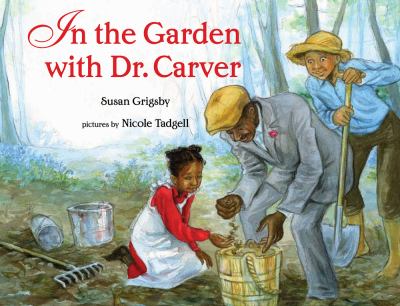
In the Garden with Dr. Carver
Susan Grigsby with pictures by Nicole Tadgell
(2011)

First impression comes from the delicately illustrated endpapers done in a field guide style; identifying plants and animals.  Historical fiction picture books are a great way to introduce important heroes to young children.  This one does just that as it relays Dr. Carver’s idea of a movable agricultural school through the South.  Adults and children learn about healthy soil, crop rotation, the damage cotton does Southern soil and how to do more with the sweet potato and the peanut. 

I loved this book as it took me through an average day with Dr. Carver and his outdoor school.  Oh, I how I long for a similar experience in today’s over processed world.  We could use much of Carver’s knowledge today.  Through his talks he encourages one young girl who wants to grow up to be a plant doctor to “listen to the plants and they will tell you what they need.” 

This would make an excellent resource for budding scientists, plant biology, biographies, black history, animals, gardening and backyard creatures.  I picked it up from my local library but plan to order it for school.  Carver was such an amazing person and we need his knowledge today.  His ideas came to mind yesterday when my husband read me something about the Pepsi Co creating a bottle made from plant sources.  George Washington Carver would be proud of this modern marvel.  If we could create more plastics from plants instead of petroleum we could lessen our dependency on oil in other ways even beyond driving fuel efficient cars.  5/5 amazing stars

Friday Feature/Black History Biographies

I’m trying to be consistent by posting this Friday Feature  before I leave school on Friday afternoons.  Today was an unusual day at school for me and one of our school families.  I can’t go into the details but it greatly affected me.  So this post is late but still done because sometimes consistency is all you have.  Have a blessed day.
I’ve been working with third grade students, cementing the idea that the Underground Railroad is a journey slaves took from the Southern plantations to the North and freedom.  I highlighted six great books last week about slave experiences.  This week I want you to know about four fantastic biographies.  There are biographies that are good for research but I like to see if they make good readalouds.  Unless it is someone a teacher points to or someone already talked about in the history books kids don’t pick up biographies which is sad because we have some beautiful ones.  Oh, unless it is a wrestler, pop star or sports figure, i mean.

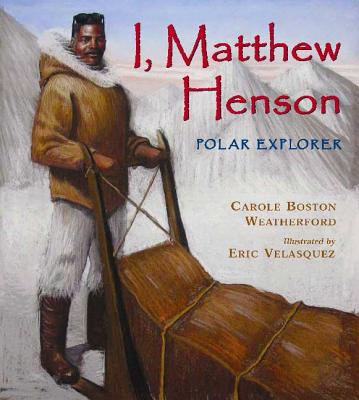
1.  I, Matthew Henson; Polar Explorer by Carole Boston Weatherford; illustrated by Eric Velasquez
I find Matthew Henson’s life story fascinating and when this book came out I was so happy-I thought for sure kids would pick it up just for it’s cover.  I’ve read this one aloud several times and once you read it to kids they love the story.  Matthew, at just 13, walked himself from D.C. to Baltimore to find a ship he could work on and each page reveals another step he took to become Admiral Peary’s right hand man and fellow explorer of Nicaragua, Greenland and eventually the North Pole.  Gorgeous illustrations.

2.  Satchel Paige; Don’t Look Back written by David A. Adler; illustrated by Terry Widener
We are a baseball family.  We love the sport and my husband has all his old cards from when he was a kid.  Often we are disappointed by players mistakes nowadays-Miguel Cabrera-if your reading this my son is so very disappointed in you.  It makes us happy to read stories like this one where Satchel Paige played hard and spoke his mind when confronted with segregation.  A true hero, Paige played for the Mobile Tigers, a semiprofessional black team after serving time in reform school for stealing toy rings.  He eventually become the first African-American to pitch in a World Series game; the Cleveland Indians against the Boston Braves!  Also amazing illustrations.

3. Talkin’ about Bessie; The Story of Aviator Elizabeth  Coleman by Nikki Grimes; illustrated by E.B. Lewis.  This book is especially unique because it tells Bessie’s story from many different perspectives.  Here’s the beginning of  the “school teacher’s”  memories:  “When it came to knowledge, Bessie was a miser, hoarding facts and figures like gold coins she was saving up to spend on something special.”    This fictionized account helps to explain how Bessie became the first female licenced pilot of African descent.

4. Stealing Home; Jackie Robinson against the Odds written by Robert Burleigh; illustrated by Mike Wimmer.  This book is easy to read outloud with a small amount of text to tell thestolen base story but each page includes a baseball card with added historical information.  A sample:  “Jackie’s mother decided to take her family from rural Georgia to Pasadena, California.  All aboard!  Things were better for black people in California than in than in the South.  But not by that much.  The family found it difficult to rent a house.  Food was scarce.  The children were called insulting names.”  Reading this to older kids it would be easy to add in these extra bits of critical information. 

Honorable Mention goes to Visiting Langston by Willie Perdomo for the amazing Bryan Collier’s collage-style illustrations and it’s easy to read style-told from the point-of-view of a young girl who admires Langston Hughes. 

Have a peaceful weekend.
Love yourself and your family.

January's Sparrow by Patricia Polacco

I ordered this in my last Titlewave order without knowing anything about it, other than the cover art was striking.  Usually I only order books I’ve read a review about, heard about or have looked at myself personally at the public library but because I have such good faith in Patricia Polacco-I oredered it with out a preview.

Once again Polacco’s book overwhelmed me, brought me to the brink of tears and showered me with great joy. This is the amazing story of the Crosswhite family, a slave family, working for a terrible master in Kentucky. After January, a family friend/brother figure is captured, returned back to the plantation then beaten by local slave traders in front of the family-it is more than they can bear.  That and the secret knowledge that their sons are soon to be sold at auction gives the Crosswhite’s reason to flee the plantation even knowing what it will mean if they are captured. 

This book highlights the Underground Railroad stations as well as Marshall, Michigan, a town where many residents disagreed with slavery and the Crosswhites get used to this taste of freedom, staying there for several years.  Ultimately they must rely on the neighbors surrounding them as well as white townspeople to save them from recapture.  If you haven’t had a chance to read this; this would be the perfect month to use this for a readaloud. 

Friday Feature

How many readers are celebrating Black History Month through February?  I’ve had a few question why I bother highlighting Black History and not because they thougth it was a waste of time but because they figured by this time black history and white history should have easily  merged.  Maybe this is true but sadly, not much history is taught at all at the elementary level.  That and I love enlightening students with what our country was like during slavery and the Civil Rights movement. 

I think they should know about Harriet Tubman, Sojourner Truth, George Washington Carver (the list goes on), as historical figures so they can go beyond their knowledge of Rosa Parks and Dr. King-great people to know-but there is more to understand.  We study it because it is the human history of our country.  I want my elementary students heading to middle school with a clear idea of what the Underground Railroad was; a path to freedom not an actual train that runs below ground.  Uhh, yes, many think just that.  Lord.

My 3 featured read-aloud books this week emphasize the Underground Railroad.

1.  Henry’s Freedom Box by Ellen Levine; illustrated by Kadir Nelson (2007)  I loved this book from the moment I laid eyes on it.  It is an example of losing those you love and a burning desire for freedom.  It begins like this:  “Henry Brown wasn’t sure how old he was.  Henry was a slave.  And slaves weren’t allowed to know their birthdays.”  Kids snap to attention when they hear those first words.  The idea of not knowing your birthday, no cake, no gifts, no intercom announcement-that and the woeful picture of Nelson’s young Henry sitting on a barrel with no shoes helps students to grasp a tiny piece of this other life.  5 stars

2. Almost to Freedom by Vaunda Micheaux Nelson; illustrations by Colin Bootman (2003).  This title is from a rag doll’s point-of-view.  It begins:  “I started out no more’n a bunch of rags on a Virginia plantation.  Lindy’s mama was my maker.  Miz Rachel done a fine job puttin’ me together, takin’ extra time to sew my face on real careful with thread, embroidery they call it.  I don’t have no hair.  Miz Rachel just made a bandanna from some old cloth and tied it ’round my head like she wore.  I used to think about havin’ me some hair, but now it don’t bother me none.”  The doll is given to Miz Rachel’s girl, Lindy, who name’s the doll Sally-her new best friend.  Lindy, Miz Rachel and Sally escape, heading North, and Sally is lost at one of their secret stops. The doll is eventually found by another young girl traveling to freedom and happy for this new handmade companion.  5 stars

3. Freedom River by Doreen Rappaport; illustrated by Bryan Collier (2000).  Plantation owners would go to great lengths to keep slave families from running.  This book illustrates the vast difference between Ohio, a free state and Kentucky, a slave state and how the river between facilitates the Underground Railroad.  It begins:  “Listen.  Listen.  ‘I heard last night someone helped a slave woman cross the river,’ said one of the workers at John Parker’s foundry.  John Parker couldn’t take credit for this escape, but it pleased him enormously to hear about it.”  We see how Parker helps one family, terribly afraid of their master, finally get to freedom.  Collier’s collage and paint illustrations are beautiful. 5 stars

Three more exceptional choices I’ll use next week:

The Patchwork Path; A Quilt Map to Freedom by Bettye Stroud, illustrated by Erin Susanne Bennett (2005).
Friend on Freedom River by Gloria Whelen, illustrated by Gijsbert van Frankenhuzen (2004).
Show Way by Jacqueline Woodson; illustrated by Hudson Talbott (2005).

What are you reading this week?  Does your school celebrate Black History Month?
Check out these other Friday Features:
Valentine’s Day
Exciting New Books