Best Books 2023 #2

I read quite a few great middle-grade fiction this year and before the month is over I wanted to share the best of those plus a handful of banned books from a variety of different lists that are worth reading. If you have young people to buy or recommend books these titles will be wonderful. 

A Place to Hang the Moon by Kate Albus (2021) : This is my favorite historical fiction in 2023 because the story centers around close-knit siblings Anna, William, and Edmund after they are evacuated from London.  They remember their deceased mother and wish for a permanent family in this small countryside village. The three of them make the best of it even during their hardest times, remaining true to their hopes for the future. I recently ordered another Kate Albus historical fiction, Nothing Else But Miracles, which centers on the Lower East Side of Manhattan during WWII. 

The Last Mapmaker by Christina Soontornvat (2022) : This is a Thai-inspired fantasy with amazing world-building as 12-year-old Sai apprentices to the last mapmaker and ends up on a high-seas adventure to chart unknown lands. This story captured my attention throughout Sai’s journey. This author writes picture books, graphic novels, early chapter books as well as middle-grade novels. 

Starfish by Lisa Fipps (2021) : In this realistic novel-in-verse Ellie is tired of all the fat jokes about her weight. She loves to swim and free float in her backyard pool. She has lists of rules she is not supposed to do like no eating in public. With the support of her father, and a new neighbor Ellie starts to feel comfortable with herself. This is a fantastic debut!

The Turtle of Michigan by Naomi Shihab Nye (2022) : This companion to The Turtle of Oman tells the story of Aref as he travels from Muscat, Oman to Ann Arbor, Michigan to be with his parents. He misses his grandfather back home yet he is excited about his new life. I loved both these stories and offer them up to students who want to learn more about other cultures. 

The Midnight Children by Dan Gemeinhart (2022) : This book defies labeling; it’s part mystery, and realistic fiction, with a touch of magical realism. Ravani longs for neighbors and friends when one night as he looks out his bedroom window he sees a family move into the abandoned house across the street. Eventually, he is welcomed in by this mix of children and things begin to change for Ravani. I love Gemeinhart’s entire catalog of books! 

Thirst by Varsha Bajaj (2022) : Minni and her family live in the poorest part of Mumbai where water from the pumps is often hard to get with long lines and shortages. When she takes over for her mother’s cleaning job in a high-rise apartment she is astonished to see water running freely from the taps for this other family.  This is a very humbling book to show real economic disparity. 

Rez Dogs by Joseph Bruchac (2021) : Set during the Pandemic this novel-in-verse tells the story of Malian, a young Wabanaki girl as she quarantines at her grandparents’ house on the reservation. She helps around the house, learns the old ways, and begins to communicate with an old stray dog. Bruchac does a wonderful job of weaving in the history of other pandemics the Native population has survived as well as government schools and reservation life. His WWII story, Code Talker, is one of my favorites. 

School Trip by Jerry Craft (2023) : This beautifully done graphic novel is filled with micro-aggressions and life lessons like its predecessors New Kid and Class Act.  The entire series should be required reading for humans. Riverdale Academy students Jordan, Liam, and Drew take a trip to Paris with their classmates. This would pair nicely with Dan Santat’s new graphic novel A First Time for Everything. 

Along Came a Spider by James Patterson (2003) : Maggie Rose and a friend go missing from their private Washington DC school and Alex Cross comes in to work the case. This is the first in the Alex Cross series and I cannot find the banned book list I originally saw it on. It’s a gripping often gory tale. 

Dry by Neal Shusterman (2018) : California draught causes teenager Alyssa to make life-and-death decisions for her family.  This was intriguing and all too real.  

Gender Queer by  Maia Kobabe (2019) : Autobiographical graphic novel about the author’s journey to understand more about their own gender identity. This was such a personally told story I was gripped with how difficult it is when young people don’t feel comfortable in the prescribed norms we’ve conditioned ourselves to be. Writing/drawing this was a true act of bravery for Maia made even more difficult by hateful backlash. Listen to the NPR interview. 

Heartstopper series by Alice Oseman (#1-4) (2020) : Charlie and Nick fall in love in this sweet graphic novel. I can understand why this was made into a Netflix series because it is a heartwarming tale of friendship and love between two very different teenage boys. Highly recommend for all humans as well. 

As a librarian and compassionate human, I will continue to read more from any current banned books lists, and even though I’ve put myself on a book-buying ban I’ve used Libby and our wonderful public library.  Before the new year, I did buy copies of a few young-adult banned books to stick in my little free library. 

Black History Month Lesson

I love this animated short that won an Oscar this year. We’ve shown in to 3rd-6th grade students and it’s created an atmosphere for good discussion about hair, cancer, and families. I worked hard to create an interesting history project for 5th and 6th grade students.  It’s a Google Slideshow if you are interesting in checking it out or using it.

My students have been very engaged in research and creating their slideshows. I love their excited conversations as they find out facts. One group announced that John Lewis’ birthday was on February 20th and he was turning 80. They’ve discovered a few Iowans like Anna Mae Weems and were excited to know she is from Waterloo and that she is still alive! Lonnie G. Johnson invented the Super Soaker. Wow!  I look forward to seeing their projects and knowing each of them learning a little something new which is what we all need to broaden our horizons.

I recently finished Maybe he just likes you by Barbara Dee which chronicles Mila as she navigates 7th grade with a group of unique friends and a group of harassing young men.  These boys play a game centered around touching or talking about Mila’s body and she has a hard time fending them off. One of her friends keeps telling her she is taking it too seriously because maybe they like her or they are just joking. The boys continue the game even after Mila has asked them to stop. This is a wonderful book for middle or high school students to read although I personally didn’t think the boys were truly understand how their behavior was wrong. It certainly will create good conversations for students. Last weekend I read The War that saved my life which was a huge hit two years ago in the library but has been gathering dust this year.  I took it home, read it and loved it so of course book talked the heck out of it with 5th-6th grade students and now it’s circulating again as is the sequel The War I finally won.

I’m still working on Mary Pipher’s book Women Rowing North.  Aging is tough and this book is an excellent navigational resource. I want to highlight the heck out of this book except that it isn’t mine.

Summer classes

I have two grad classes this summer and they are not easy; lots of homework, and projects. The good thing is I am learning quite a bit and the two books assigned are both very good.

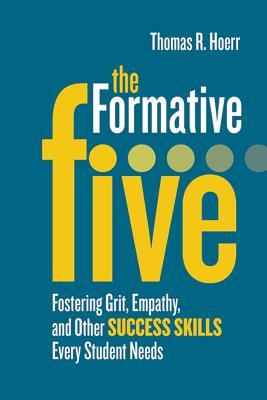
The Formative five: fostering grit, empathy, and other success skills every student needs by Thomas R. Hoerr

This book explains how schools need to get back to the “basics” of teaching a deeper thought process so our students will be better achievers in the job market.  Grit, embracing diversity, integrity, empathy, and self-control encompass the skills they need to be successful. The book breaks down each skill and shares methods to integrate into every day. This was an easy read and I will use the new ideas with students. I’ve already compiled lists of picture books to use with students that highlight each essential word. 

Creative Schools by Ken Robinson, Ph. D.

I’ve watched Ken Robinson’s Ted Talk “Do schools kill creativity?” and the book extends that thinking. The book shares many examples of schools and programs that are reaching beyond the normal school day.  Like Thomas Hoerr, Ken Robinson is looking for a different type of education for all of our students.  His ideas are radical and very interesting to me.  The book makes me want to set my classes up differently and not sweat the small or big stuff; students need to enjoy school more to keep their creativity and the joy of learning alive! 

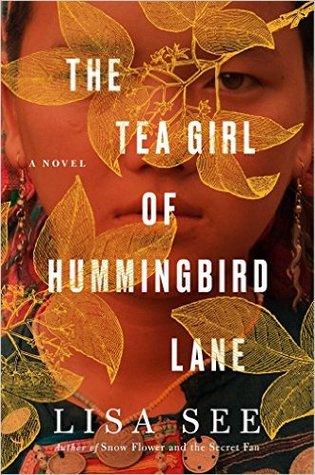
Outside of my summer studies, I read The tea girl of Hummingbird Lane by Lisa See for book club. See does an amazing amount of research for her books and this one is no exception. This one has great characters, lots of information about the Ahka hill tribe in China, and the tea industry. If you are looking for a good, thrilling read-give this one a try.

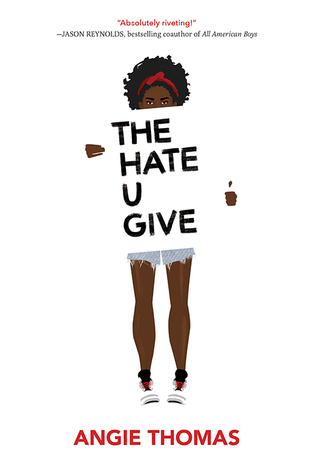
The Hate U Give by Angie Thomas

I read many positive reviews about this brand new (2017) book I started following the author, Angie Thomas, on twitter. I try hard NOT to buy books but this time I felt it was a great cause. #weneeddiversebooks

16-year-old Starr Carter lives in two different worlds as she maneuvers between her home and neighborhood and the private prep school she attends where she works hard to be “less ghetto”. It’s difficult separating herself out like that and, after one of her childhood friends is shot in front of her by a police officer, her balancing act starts to crumble.

Through Starr’s eyes we are able to experience what many young people are frustrated with today; police brutality and rampant racism. Starr has a family that supports her, parents that are involved in her education and teaching her what’s right. We can see through her father and his friends how hard it is to make good decisions when you have people inviting you to do bad everyday. Her family has been witness to a lot of tragedy and just like other families they keep moving forward even though the journey is trying.

I loved the language, the cadence of listening to Starr speak in both voices.

“I swallow. I wish I could say yes, but I don’t know. On the one hand, it’s the cops. It’s not like I’ll be telling just anybody.
On the other hand, it’s the cops. One of them killed Khalil.
But Uncle Carlos is a cop, and he wouldn’t ask me to do something that would hurt me.
‘Will it get Khalil justice?’ I ask.
Uncle Carlos nods. ‘It will.”(55)

and

“The drug dealer. That’s how they see him. It doesn’t matter that he’s suspected of doing it. ‘Drug Dealer’ is louder than ‘suspected’ ever will be.
If it’s revealed that I was in the car, what will that make me? The thug ghetto girl with the drug dealer? What will my teachers think about me? My friends? The whole fucking world, possibly?” (113)

and as life gets back to something like normal her family celebrates:

“Salt-N-Pepa’s “Push It” blasts from the speakers. That’s one song Daddy shouldn’t play. The only thing worse would be that old song “Back that Thang Up.” Momma loses her damn mind when it comes on. Really, just say, “Cash Money Records takin’ over for the ’99 and the 2000,” and she suddenly becomes ratchet as hell.
She and Aunt Pam both go, “Heeey!” to Salt-N-Pepa and do all these old dance moves. I like nineties shows and movies but I do not wanna see my mom and auntie reenact that decade in dance…” (356)

This is an important YA story that adults should read as well. I am excited to read what ever Angie Thomas writes next.

Black Lives Matter

A few years ago our son, on the way to community college, reached to the floor of his car to get a kleenex and as he did this his car swerved, hit a small sign for the median. He was a young driver and he didn’t know what to do. He wanted to get to class on time so he just kept driving. Unbeknownst to him an off-duty police officer was near him in traffic and took it upon himself to follow our son all the way to school; 20 minutes away. He called for back up at some point and when our son pulled into the parking lot he was met with two police cars.  The off-duty officer’s reasoning was that he thought our son was drunk or high even though he followed him all the way to school and he made no other traffic errors. He didn’t swerve, cross the yellow line, or any other traffic violations.

Tristan was freaked out by this incident. After the on-duty officers spoke with him and ascertained that he was not drunk (at 9:30 am) and that he just had a cold he was allowed to head in for class. Our family, while generally law-abiding citizens, thought the off-duty officer was a little overzealous. Why didn’t he just snap a photo of our son’s licence plate? After all that we paid a nominal fee to have a new sign added back to the median. Thankfully that was it.

When I think of this crazy incident though and think about how scared my son felt that this guy in the oversized black pick-up was purposefully following him and it makes me realize how all American citizens with many shades of brown/black would feel in this situation. My son might have been scared and confused but he didn’t fear for his life.

The video above from the NYT encapsulates the bloodshed based on skin tone.  Each one is violent and freaks me out how easily guns are blasted off as if they are playing a video game and not real life. Reaching for your wallet, errant teenagers leaving a pool in swim suits, a man selling CDs, a boy playing with a fake gun, a young man throwing rocks; all just people going about their day, not one a violent criminal yet dead at the end of the day.

I know the teens in swimsuits were not shot at but why in God’s glory would police officers need to pull their weapons on teens in bathing suits. Warn them and move on. It looks like a scene from the 1960s not 2015.

I attended a vigil for #Orlando a few weeks ago and I have to admit I felt fear as I stood in the park surrounded by many like-minded friends and neighbors.  Bordering the park were streets with drivers, some who honked and waved and some who revved their engines purposefully as they raced by us.

Years ago our family stood at many street corners protesting against Bush’s Iraq war. We knew it was a senseless war, planned for oil, not weapons of mass destruction. Often as we stood there, vulnerable, we had people in cars harass us, point, curse, scream horrible comments to us yet it was important for us to make our stand.

Each one of us needs to take a stand now to make this better. We need police communities to become much more sensitive through training/education. We need officers who do shoot to kill to face criminal charges.  We need local governments to take this seriously. We do seriously need gun control. Citizens armed with a variety of weapons, police officers armed and ready to shoot; we are getting nowhere fast!

Most Americans are interested in real freedom for all. #blacklivesmatter because we all matter. We are human. We need to stand together even if we are afraid.

Counting by 7s by Holly Goldberg Sloan

Counting by 7s
Holly Goldberg Sloan
2013

Willow Chance is a young woman who literally is out of chances yet somehow she manages to positively affect change in all the people around her.  In the very first chapter her adoptive parents are killed in a car accident and she is left completely alone. No family friends, no long lost rich aunt, no scheming mad uncle to claim her.  Instead she finds herself with a sad excuse for a school counselor and a brother and sister she never met before but who happen to be visiting the same counselor when she finds out that her parents have died.

The misfit male counselor, Dell Duke, is lost as to how to even take action in this situation even though others are turning to him for help.  Mai and Quang-ha, sister and brother who live with their mother in a garage behind their mother’s nail salon and it is Mai who comes to the aid of Willow when it is obvious that she has nowhere to go.  With this blanket of sadness over everyone it would seem this book would spill tears right out of it’s pages but there is something magical about Willow Chance.  Her parents were high-spirited happy people who loved her deeply for all her unusual quirkiness and she has thrived in that love.  Now without that love from the two most important people she has to find a way to survive.

I loved I’ll Be There Holly Goldberg Sloan’s first novel and find that the two books have a similarity in that she takes oddball characters throws them into tough situations and makes us love them.

Quote:

Jamison Children’s Center is the county facility that provides emergency foster care.
Lenore Cole gives me a pamphlet.
I read it, but get the distinct feeling that the place is probably for kids who have parents who hit them or don’t feed them real food because they are too busy taking drugs or stealing something.  
As we drive up to the building, I put my index and middle fingers on my carotid artery just behind my ear to take my pulse.
I know for a fact that my heart rate is in some kind of danger zone.” (139)

Willow is a genius and knows things that most people don’t and she’s not afraid to share. Through her interactions with others she pushes them forward even though she herself cannot get past her grief.  This is an amazing realistic fiction book but with such unusual characters that one can only make sure to push it into the hands of many young 6th, 7th, and 8th grade students to see what they take from it.  I can’t imagine anyone not cheering for Willow.  

Code Talker by Joseph Bruchac

Code Talker
Joseph Bruchac
2005
224 pages

Kii Yazhi is six years old when he is taken from his mother, from his land to go to boarding school governed by the United States.  His uncle drives him there in a wagon and gives him this advice:

Little Boy, he said, Sister’s first son, listen to me.  You are not going to school for yourself.  You are doing this for your family.  To learn the ways of the bilagaanaa, the white people, is a good thing.  Our Navajo language is sacred and beautiful.  Yet all the laws of the United States, those laws that we now have to live by, they are in English. (8)

Boarding school takes away their beautiful Navajo clothes, their symbolic long hair, their language, and even their names.  Kii Yazhi becomes Ned Begay. His school journey begins and ends with disrespectful and mean teachers yet he survives and does well.  He chooses to follow the rules and gets sent on to secondary school.  He is 16 when war breaks out and he wants to enlist but waits until the next year with his parent’s permission.  The U.S. Marines have a special use for Navajo enlistees and he is able to be specially trained to send codes using the exact language he had been beaten for using at boarding school; a wonderful twist!

The story is told from Begay’s memory as he shares with his grandchildren.  Ned’s journey shares such an overlooked part of history; one that I knew about but only on the barest surface.  Bruchac inserts such wisdom among the awful horrors of boarding school and the war.

You know, grandchildren, for a long time even after the war, it was hard for me to have any good thoughts about the Japanese.  What troubled me the most was the way they treated the native people of the islands they conquered.  They believed only Japanese were real humans.  Anyone else could be treated like a dog.  Never forget, grandchildren, that we must always see all other people as human beings, worthy of respect.  We must never forget, as the Japanese forgot, that all life is holy. (148)

This is great historical non-fiction and I plan to use it this year with a boy’s book club.  They will love the war element and I will love that they are looking at it from a different angle.

Guacamole; A cooking poem by Jorge Argueta and Margarita Sada

One day over at Jama Ratigan’s fabulous blog, Alphabet Soup, I entered one of her drawings and I won!
I almost missed my opportunity to win this book because I missed her email message to me and she nicely emailed me a second time.  Thank you Jama!

Groovy Girl and I were both home when the post person brought the package from House of Anansi Press with this very green poetry food book inside the yellow bubble wrapper.  We actually sat down in the grass and read it right away.

The first thing you notice are the gorgeous illustrations that show the young children interacting playfully with the food. The second point is that the story is told bilingually with Spanish and English.  It begins:

“Today I’m going to make you guacamole,”
I say to my mother and father
and my little brother and sister.
They stare at me with their big eyes
that remind me of the green avocados
in the basket on the red kitchen table. (1)

and it continues with vivid colors and words used to describe the process of making a delicious bowl of guacamole!  I adore how this young chef sings and dances around the kitchen with her apron on.  She continues with:

I wash them in the fountain of the sink
and then, dancing and singing,
I put them on the red kitchen table. (6)

This is a treasure of a book for the kitchen or the library.  It is a celebration of food and fun and this young girl celebrates the simple process of making a family tradition.  I think I’m going to add it to my school library collection but I’m not ready to part with it at home yet.  I am waiting for some beautiful avocados to slide my way so I can give this recipe a try. Thanks again to Jama for offering such a great poetry giveaway!

Louise Erdrich; books with historical significance

I don’t know why it took me so long to discover this wonderful series.  Next year I plan to put it on our 5th grade book club reading list.  Thank you to V. for pushing me toward this title.

The Birchbark House (1999)

Omakayas and her family are Ojibwe Indians living on Madeline Island.  The year is 1849 and Omakayas (Little Frog) is seven years old.  She has one older sister, Angeline, and two younger brothers; one a baby and the other, Pinch, is pure trouble.  The book is set up on the cycle of the seasons as this small tribe of Ojibwes enjoy the  warm days of summer preparing for fall and winter.  The snowy months prove difficult for the tribe as many are short on food and sickness robs Omakayas of her baby brother.  Erdrich set it up nicely in this seasonal manner  to help us feel in the moment with this peaceful tribe.  I have a romantic notion for Native tribes and this book shares all the positive as they begin to feel the encroachment of the white man on their land and Omakayas understands more about her gift for dreams.

The Game of Silence (2005)

The sequel to The Birchbark House continues the thread through seasons with several adventures.  Another small tribe arrives by canoe, bedraggled and starved, as they escape from the white man and sickness.  Old Tallow gets lost during a heavy snow as she searches for game to hunt and Deydey leads the priest on a mission just as the ice over the lake begins to crack and break.  Any of these problems demonstrate the difficulties native people had even without the added fear of losing their way of life.  Omakayas learns to accept her dreams as she uses a particularly powerful dream to rescue her father.  She is a strong and unique young female character who takes pride in her family and the way of life she’s too often taken for granted.

A quote:

“The air cooled quickly.  It was a little cold to sleep outside, but Deydey spread out the fire and built it up to a huge blaze.  When the fire had all burned down to a bed of coals, he spread out the coals and then all of the family heaped sand on top of the big spread-out remains of the fire.  They were making their bed. The soft comfortable sand was their mattress.  Underneath, the coals would continue to give off a gently heat.  They all lay down under the stars.   There were no mosquitos or flies when the air was so chilly.  Yet the warmth from underneath kept them comfortable.  Deydey made this sort of sand bed often on his trips, and the children loved for him to make it for them.” (72-73, The Game of Silence)

Louise Erdrich’s native heritage helped to shape this series as she recounts events in her own family’s past.  I have a few other books ahead of it but I plan to read the third and final book, The Porcupine Year. A post by Carol Hurst talks about The Birchbark House. The Game of Silence is discussed in this article at KidsReads and The Porcupine Year has this article also at KidsReads.

Friday Feature; Celebrating Multicultural Mamas

There are many, many beautiful books about the women who tend to us.  This is a short list of books featuring mother’s and their struggles.

1) Hair for Mama by Kelly A. Tinkham; ill. by Amy June Bates (2007).

Marcus tells the story of his mother’s cancer and how it affects their annual picture day.  Mama doesn’t want to be in the picture if she doesn’t have any hair and Marcus searches for the perfect solution.  Sweet, Sweet story.

2) Mama’s Saris by Pooja Makhijani; ill. by Elena Gomez (2007).

A young girl admires her mother’s sari collection, kept in an old suitcase under the bed, as her mother chooses one to wear for a special occasion.  The little girl desperately wants to wear one so she can feel just like her mama.  The illustrations are filled with gorgeous colors of the saris as they remember special occasions. 

3)  A Chair For My Mother by Vera B. Williams (1982).

A fire destroyed their belongings so a young girl, mama and grandma save change in a jar in hopes of one day buying a beautiful new chair.  They find an apartment to live in and the neighborhood pitches and shares furniture with them but the young girl wants so much to purchase a big, comfy chair for her mother to sit in after a long day of waiting tables. 

What books are in your collection that celebrate mothers?

I don’t know what’s planned for me on Sunday but I do know I’ll be happy, surrounded by my children.  My two wishes: great weather and a little time to read.