The Award-Winning Moon Over Manifest

(2010)
342 pages

I would love to be the kind of person who is able to read the Newberry winner right away or even better, to have already read it before the announcement.  But let’s face it, I have a  busy life with family, school and all the other books on my stack(s).  There is a certain amount of guilt involved as a librarian until you’ve read the Newberry there.  Ahhhh. I feel so much better now and I know the committee made a worthy choice.

When this one was announced it wasn’t even on my radar so I quickly ordered it for my school and then, let it languish around the library.  One day in trying to model good reading to a class I picked it out of a stack and started reading while I wandered among the fourth grade students.  I was hooked. 
Abilene’s voice is strong, clear and interesting.  Here she is getting ready to jump off the train:

At the last car, I waited, listening the way I’d been taught-wait till the clack of the train wheels slows to the rhythm of your heartbeat.  The trouble is my heart speeds up when I’m looking at the ground rushing by.  Finally, I saw a grassy spot and jumped.  The ground came quick and hard, but I landed and rolled as the train lumbered on without a thank-you or goodbye. (3)

Summary from GoodReads:

Abilene Tucker feels abandoned. Her father has put her on a train, sending her off to live with an old friend for the summer while he works a railroad job. Armed only with a few possessions and her list of universals, Abilene jumps off the train in Manifest, Kansas, aiming to learn about the boy her father once was.
Having heard stories about Manifest, Abilene is disappointed to find that it’s just a dried-up, worn-out old town. But her disappointment quickly turns to excitement when she discovers a hidden cigar box full of mementos, including some old letters that mention a spy known as the Rattler. These mysterious letters send Abilene and her new friends, Lettie and Ruthanne, on an honest-to-goodness spy hunt, even though they are warned to “Leave Well Enough Alone.”

Abilene throws all caution aside when she heads down the mysterious Path to Perdition to pay a debt to the reclusive Miss Sadie, a diviner who only tells stories from the past. It seems that Manifest’s history is full of colorful and shadowy characters—and long-held secrets. The more Abilene hears, the more determined she is to learn just what role her father played in that history. And as Manifest’s secrets are laid bare one by one, Abilene begins to weave her own story into the fabric of the town.

Powerful in its simplicity and rich in historical detail, Clare Vanderpool’s debut is a gripping story of loss and redemption.

My thoughts:

The last sentence says it all…It is a powerful tale! It is a gripping story!  One of the reasons I love historical fiction is because there’s a lot to learn while reading and I AM a life-long learner at heart.  This story is special because you get two sets of histories; Abilene’s in 1936 and her father’s in 1918, which Abilene begins to understand as she tries to piece together her father’s part in Manifest’s history. The result is back and forth storytelling brought on by one of my favorite characters, Miss Sadie, a soothsayer or fortune-telling woman of Manifest.  As Miss Sadie tells her remembrances a beautiful picture of Manifest is created for Abiline and her friends. 

If you haven’t had a chance to read this award-winner take the time as it is richly written.

To find this book at an independent bookseller near you, click on the title, Moon Over Manifest

January's Sparrow by Patricia Polacco

I ordered this in my last Titlewave order without knowing anything about it, other than the cover art was striking.  Usually I only order books I’ve read a review about, heard about or have looked at myself personally at the public library but because I have such good faith in Patricia Polacco-I oredered it with out a preview.

Once again Polacco’s book overwhelmed me, brought me to the brink of tears and showered me with great joy. This is the amazing story of the Crosswhite family, a slave family, working for a terrible master in Kentucky. After January, a family friend/brother figure is captured, returned back to the plantation then beaten by local slave traders in front of the family-it is more than they can bear.  That and the secret knowledge that their sons are soon to be sold at auction gives the Crosswhite’s reason to flee the plantation even knowing what it will mean if they are captured. 

This book highlights the Underground Railroad stations as well as Marshall, Michigan, a town where many residents disagreed with slavery and the Crosswhites get used to this taste of freedom, staying there for several years.  Ultimately they must rely on the neighbors surrounding them as well as white townspeople to save them from recapture.  If you haven’t had a chance to read this; this would be the perfect month to use this for a readaloud. 

Friday Feature

How many readers are celebrating Black History Month through February?  I’ve had a few question why I bother highlighting Black History and not because they thougth it was a waste of time but because they figured by this time black history and white history should have easily  merged.  Maybe this is true but sadly, not much history is taught at all at the elementary level.  That and I love enlightening students with what our country was like during slavery and the Civil Rights movement. 

I think they should know about Harriet Tubman, Sojourner Truth, George Washington Carver (the list goes on), as historical figures so they can go beyond their knowledge of Rosa Parks and Dr. King-great people to know-but there is more to understand.  We study it because it is the human history of our country.  I want my elementary students heading to middle school with a clear idea of what the Underground Railroad was; a path to freedom not an actual train that runs below ground.  Uhh, yes, many think just that.  Lord.

My 3 featured read-aloud books this week emphasize the Underground Railroad.

1.  Henry’s Freedom Box by Ellen Levine; illustrated by Kadir Nelson (2007)  I loved this book from the moment I laid eyes on it.  It is an example of losing those you love and a burning desire for freedom.  It begins like this:  “Henry Brown wasn’t sure how old he was.  Henry was a slave.  And slaves weren’t allowed to know their birthdays.”  Kids snap to attention when they hear those first words.  The idea of not knowing your birthday, no cake, no gifts, no intercom announcement-that and the woeful picture of Nelson’s young Henry sitting on a barrel with no shoes helps students to grasp a tiny piece of this other life.  5 stars

2. Almost to Freedom by Vaunda Micheaux Nelson; illustrations by Colin Bootman (2003).  This title is from a rag doll’s point-of-view.  It begins:  “I started out no more’n a bunch of rags on a Virginia plantation.  Lindy’s mama was my maker.  Miz Rachel done a fine job puttin’ me together, takin’ extra time to sew my face on real careful with thread, embroidery they call it.  I don’t have no hair.  Miz Rachel just made a bandanna from some old cloth and tied it ’round my head like she wore.  I used to think about havin’ me some hair, but now it don’t bother me none.”  The doll is given to Miz Rachel’s girl, Lindy, who name’s the doll Sally-her new best friend.  Lindy, Miz Rachel and Sally escape, heading North, and Sally is lost at one of their secret stops. The doll is eventually found by another young girl traveling to freedom and happy for this new handmade companion.  5 stars

3. Freedom River by Doreen Rappaport; illustrated by Bryan Collier (2000).  Plantation owners would go to great lengths to keep slave families from running.  This book illustrates the vast difference between Ohio, a free state and Kentucky, a slave state and how the river between facilitates the Underground Railroad.  It begins:  “Listen.  Listen.  ‘I heard last night someone helped a slave woman cross the river,’ said one of the workers at John Parker’s foundry.  John Parker couldn’t take credit for this escape, but it pleased him enormously to hear about it.”  We see how Parker helps one family, terribly afraid of their master, finally get to freedom.  Collier’s collage and paint illustrations are beautiful. 5 stars

Three more exceptional choices I’ll use next week:

The Patchwork Path; A Quilt Map to Freedom by Bettye Stroud, illustrated by Erin Susanne Bennett (2005).
Friend on Freedom River by Gloria Whelen, illustrated by Gijsbert van Frankenhuzen (2004).
Show Way by Jacqueline Woodson; illustrated by Hudson Talbott (2005).

What are you reading this week?  Does your school celebrate Black History Month?
Check out these other Friday Features:
Valentine’s Day
Exciting New Books

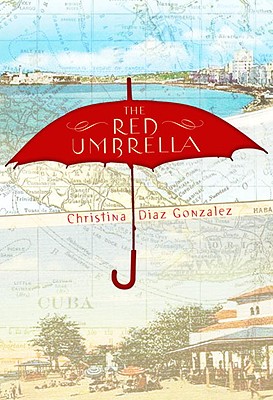
The Red Umbrella

by  Christina Diaz Gonzalez
2010
272 pages

Every once in a great while my friend Tina and I are able to browse our local library together.  When we do I always leave with a double bag full of books.  She simply walks down the shelves and says “You need to read this one and this one and oh, have you NOT read this one…”  She is an amazing reader, far more prolific than me, and has a knack for picking great books.  On our last library visit she handed me The Red Umbrella and it was the first one I pulled out of the library bag.

Synopsis from the book:

     Cuba 1961: two years after the Communist revolution, Lucía Álvarez still leads a carefree life, dreaming of parties and her first crush. But when the soldiers come to her sleepy Cuban town, everything begins to change. Freedoms are stripped away. Neighbors disappear. Her friends feel like strangers. And her family is being watched.
     As the revolution’s impact becomes more oppressive, Lucía’s parents make the heart-wrenching decision to send her and her little brother to the United States—on their own.
     Suddenly plunked down in Nebraska with well-meaning strangers, Lucía struggles to adapt to a new country, a new language, a new way of life. But what of her old life? Will she ever see her home or her parents again? And if she does, will she still be the same girl?

My thoughts:

I was moved by both parts of this story.  I didn’t know very much about Cuban life before Castro or after and Gonzalez’s  work gave me a look into this history.   I found it interesting how the revolutionaries worked so heavily on Cuban children, especially young adults, to carry out their “for the good of the common people” message.  Learning about Operation Pedro Pan was new and one I was happy to read about.  Thankfully, the U.S. took part in this exodus of children from Cuba to the States.   As Lucia and her brother are sent away  her friend, Ivette, stays in Cuba and attends Castro’s camps to learn how to be a good revolutionary leader.  I liked the balance between Lucia’s Nebraska story and Ivette’s Cuba experience told through her letters.

Once in Nebraska, Lucia and Frankie, while missing their parents, also must cope with how difficult it is to come to this country and be an outsider.  The Baxters are an older couple, living on a farm, in Grand Island, Nebraska-the polar opposite of Cuba, especially in winter.  Luckily, even though it is rough, and they miss their parents, life becomes comfortable with the Baxters.  Lucia and Frankie find friends at school and do well in their new environment. 

Perfect Quote:

I was going to be wearing hand-me-downs.  Used clothing.  I’d never had to do that before.  We always bought the very latest fashions.  Ivette would be mortified to see me wearing these clothes.
I missed her.  I also missed Mama and Papa, my room, my school, everything I’d left behind.  Tears started to form, but I took a deep breath to try to keep them from falling.  I didn’t want to cry anymore.  (156)

Authors often speak of a story emerging, just asking to be written and this is probably  true of Christina Diaz Gonzalez’s story based on recollections from her own family.   I feel richer having read Lucia’s tale and look forward to others by Gonazalez.

Christina Diaz Gonzalez’s blog.
To find it at a local IndieBound store near you, click on the title: The Red Umbrella

Other reviews on The Red Umbrella:

Reading Rants!
Kiss the Book
Semicolon
JuJu at Tales of Whimsy

The Lacuna by Barbara Kingsolver

I like this cover even though this is not the version I read. 
Why two such different covers?

I worship at the feet of Ms. Kingsolver’s immense writing skills.  I’ve been a fan since I happened upon The Bean Trees way back in college.  Her books have an earthiness to them and thus highly appealing to me.  I’ve read and enjoyed  most everything she’s written.  The Lacuna scared me at first because of its size…507 pages and also I’d heard many negative reports from friends both in person and in the blogging world.  Many readers looked forward to The Lacuna’s publication date, reserved new copies at the library or ordered them and then abandoned the book half way through.  I was crushed but knew eventually I would pick it up myself.  Luckily a dear friend from my Good Spirits Book Club finished it, praised it and handed it to me to read.  While I can understand why some gave up…I loved it and was once again impressed with Kingsolver’s amazing talent.

GoodReads Synopsis:

     In her most accomplished novel, Barbara Kingsolver takes us on an epic journey from the Mexico City of artists Diego Rivera and Frida Kahlo to the America of Pearl Harbor, FDR, and J. Edgar Hoover. The Lacuna is a poignant story of a man pulled between two nations as they invent their modern identities.

     Born in the United States, reared in a series of provisional households in Mexico—from a coastal island jungle to 1930s Mexico City—Harrison Shepherd finds precarious shelter but no sense of home on his thrilling odyssey. Life is whatever he learns from housekeepers who put him to work in the kitchen, errands he runs in the streets, and one fateful day, by mixing plaster for famed Mexican muralist Diego Rivera. He discovers a passion for Aztec history and meets the exotic, imperious artist Frida Kahlo, who will become his lifelong friend. When he goes to work for Lev Trotsky, an exiled political leader fighting for his life, Shepherd inadvertently casts his lot with art and revolution, newspaper headlines and howling gossip, and a risk of terrible violence.
     Meanwhile, to the north, the United States will soon be caught up in the internationalist goodwill of World War II. There in the land of his birth, Shepherd believes he might remake himself in America’s hopeful image and claim a voice of his own. He finds support from an unlikely kindred soul, his stenographer, Mrs. Brown, who will be far more valuable to her employer than he could ever know. Through darkening years, political winds continue to toss him between north and south in a plot that turns many times on the unspeakable breach—the lacuna—between truth and public presumption.
     With deeply compelling characters, a vivid sense of place, and a clear grasp of how history and public opinion can shape a life, Barbara Kingsolver has created an unforgettable portrait of the artist—and of art itself. The Lacuna is a rich and daring work of literature, establishing its author as one of the most provocative and important of her time.

My thoughts:

I was amazed by the amount of research it must have taken for Kingsolver to create this truly multi-layered work.  Harrison Shepherd drew me into his story, told mostly through journal entries and letters.  His mother, both despicable and human, raises Harrison without any sense of home, always striving for a new and better boyfriend/husband/meal ticket/companion.  She never finds fullfillment in her own life but somehow through her twisted, topsy-turvy life Harrison is satisfied with the simple side of his life.

He  finds solace in writing, keeping a journal of sorts, and allowing life to lead him to work.   I so enjoyed meeting Diego Rivera, Frida Kahlo and Leon Trotsky within the first half of  Harrison’s Mexico story.  I had an inkling of Trotsky’s relationship to Kahlo and Rivera but this book made me want to know more.  I want to go back and watch the 2002 movie, Frida starring Salma Hayek and I’m interested in  Trotsky’s ideas. I wonder if there is other historical fiction that includes Leon Trotsky’s early life in Russia.

The second half of the book takes place in Asheville where Violet Brown picks up Harrison’s thread as she works as his Girl Friday.  Her character brings a new form of friendship to Harrison’s life as she takes care of him like a mother or a sister would, appreciating all of Harrison’s quirkiness.    I loved the depth of this book and enjoyed discussing varying elements with my husband.  If you haven’t given this book a try please do…it has,  for me, put Kingsolver’s work on another literary level. 

Check out Barbara Kingsolver’s website
Find it at an IndieBound bookstore near you…The Lacuna

Other bits about The Lacuna:

The Blue Bookcase
Molly’s Cafe Books
decemberthirty
and Amy at Totally Uninspired

Forge (2010) by Laurie Halse Anderson

     Did you read Chains (2008) by Halse Anderson?
Oh, it was a good read!  I liked it because it was a serious look at the Revolutionary War through the eyes of Isabel, a slave.  What a perfect paradox: Americans fighting for their freedom from King George while enslaving Africans into intense labor. 

Good Reads Summary:

     In this compelling sequel to Chains, a National Book Award Finalist and winner of the Scott O’Dell Award for Historical Fiction, acclaimed author Laurie Halse Anderson shifts perspective from Isabel to Curzon and brings to the page the tale of what it takes for runaway slaves to forge their own paths in a world of obstacles—and in the midst of the American Revolution.
   The Patriot Army was shaped and strengthened by the desperate circumstances of the Valley Forge winter. This is where Curzon the boy becomes Curzon the young man. In addition to the hardships of soldiering, he lives with the fear of discovery, for he is an escaped slave passing for free. And then there is Isabel, who is also at Valley Forge—against her will. She and Curzon have to sort out the tangled threads of their friendship while figuring out what stands between the two of them and true freedom.

My thoughts:  I have to admit at first I was a bit disappointed with the heavy focus on Curzon and all the fighting.  I missed Isabel’s character and the mystery and intrigue of the first book, but as I kept reading I enjoyed learning about the Valley Forge experience. I did not know, for example, that the soldiers had to build their own cabins in the snow.  Curzon’s story follows the battles closely and they end up at Valley Forge. He is constantly tormented by some of his fellow soldiers and yet, remarkably, he manages to maintain his dignity throughout. Thankfully Isabel eventually comes back into Curzon’s life, demonstrating how tenous life is for both of them, rounding the story out nicely for me.
     This is a perfect book to help young people understand the horrors of war, slavery and the importance of friendship throughout adversity.  I’m now anxiously awaiting the third installment, Ashes , in Halse Anderson’s Seeds of American series.

Some books I have to really search for the perfect quote to share, not so with Halse Anderson’s work because every page has something worth sharing.

Random Quote: 

The last lad was John Burns.  His rude  manner declared him my enemy the first time he clapped eyes on me.  Burns had white skin that turned red when he was angry (a frequent condition), dirt-colored hair that never stayed tied back in a queue, and small eyes like a badger’s that were forever seeking a way to avoid work.  He spat at my feet whenever I walked by.  He accused me of stealing my new hat.  He said the crudest kinds of things about my parents and grandparents, and he convinced the Barry brothers to join him in his foulness. (54)

Read Abby (the) Librarian”s review.
Find the author’s website and blog here-Laurie Halse Anderson
Enjoy this great article (Publishers Weekly/Shelf Talker) about a school visit

I’m an IndieBound affiliate. 
Buy Forge from an IndieBound

One Crazy Summer

by Rita Williams-Garcia
(2010)
215 pages

     It’s 1968 and LBJ is president, the Vietnam War rages on and Robert Kennedy’s funeral takes place at St. Patrick’s Cathedral in NYC.  The Yippie Movement lead by Abbie Hoffman is in  East Coast  while on the West,  the Black Panthers  lead their own movement.  While they  protest Huey Newton’s arrest and the death of young Panther, Bobby Hutton, the Panthers also run a summer camp of sorts, a free health clinic and provide breakfast for thousands of children in the Oakland neighborhood.  It was fascintating stuff learning more about this organization, generally shadowed in a negative light.

     The book opens with three sisters, Delphine, Vonetta and Fern,  flying from NYC to Oakland, CA where they will meet their mother-the mother who abandoned them years earlier when Fern was a baby.   She chose poetry over her own children but their father feels it is important for the girls to see her. 

The meeting: 

The stewardess marched us on over to this figure.  Once we were there, face-to-face, the stewardess stopped in her tracks and made herself a barrier between the strange woman and us.  The same stewardess who let the large white woman gawk at us and press money into Fern’s hand wasn’t so quick to hand us over to the woman I said was our mother.  I wanted to be mad, but I couldn’t say I blamed her entirely.  It could have been the way the woman was dressed.  Big black shades.  Scarf tied around her head.  Over the scarf, a big hat tilted down, the kind Pa wore with a suit.  A pair of man’s pants.  Fern clung to me.  Cecile looked more like a secret agent than a mother.  But I knew she was Cecile.  I knew she was our mother….

Cecile finally turned as she got to the glass doors and looked to see where we were.  When we caught up, she said, “Ya’ll have to move if you’re going to be with me.” (18-19)

     It is an amazing summer of connections but not between Cecile and her girls but the community and the girls; a world far away from their sheltered life with Big Ma and their Pa.  Here they go to get dinner for themselves from the Chinese restaurant on the corner.  They become part of life at the Black Panter Community Center.  As they move into the larger picture of the world, Cecile realizes a thing or two about these girls she does not claim. 


     My thoughts:  I loved reading about this era and felt Rita Williams-Garcia did a great job of portraying this very hip, yet dark time in our history.  Each character had very distinct qualities and even Cecile had some hidden treasures with in her odd personality. Even though I despised her abandonment I know in my heart many women are just not mothers.  The sisters are loveable and fiesty-how could Cecile not  love them fully-and end up understanding her despite her shortcomings as a mother.  I think this one will win an award or two!


Other Reviews:


Stacy at Welcome to my Tweendom
Nicki at Dog Ear
Jennifer Represents…
Sommer Reading


Shop Indie Bookstores

Devil on My Heels

Joyce McDonald
(2004)
262 pages
Young Adult

     I have a blogging friend who has read so many, many books that when we go to the library she is really good about going down the stacks and pulling out random books (books you might not otherwise take one look at) and asking (telling) you to read them.  I generally listen until my stack gets too high and she is always right.  The last time we were at the library she told me I just had to read McDonald’s Devil on My Heels and I loved it!!

Fifteen-year-old Dove narrates this historical fiction/coming-of-age tale and her story begins like this:

Lately I have taken to reading poems to dead boys in the Benevolence Baptist Cemetary.  They don’t walk away before I have finished the first sentence, like most of the live boys I know.  When I read to them, their eyes don’t wander to something, or someone, more interesting.  I can pretend these boys are listening.  I can pretend they hear me. (1)

Dove is studying poetry with her English teacher, Ms. Delpheena Poyer and she continues:

On Friday afternoons like this one, right after seventh period.  I head straight for the cemetary.  I like to sit beneath the Austrian pines in the cool shade, reading lines from Tennyson or Wordsworth, listening to the trees making up their own poems.  Soft words in the language of wind and pine needles.   (1) 

     See that’s all on just page one…Dove is a great character, innocent to the ways of the world but savvy enough to know that “live boys” don’t appreciate great poetry.  Her mother passed when she was a four-year-old and she lives with her father on an orange grove in Benevolence, Florida.  Her days are spent hanging out with her friends, going to school and trying to feel older than she is.  It hasn’t been that many years past that she was tearing around the orange grove with Gator, a young African-American grove worker and Chase Tully, a grove owner’s son.   Things are beginning to change for Dove…
    Both Gator and Chase are still important to her and are critical in helping Dove see how the groves provide a working environment one rocky step up from slavery.   It’s a slow realization that things are not as easy going as her life has been in the past as she gets used to the idea that the local KKK group is rearing it’s ugly head again as the workers are blamed for random fires started in several groves.  Delia Washburn, Dove’s housekeeper since the death of her mother, also provides answers to old mysteries involving her dead husband. Inbetween trying to figure out the meaning of all the local fires, Dove tries to put out the fire burning inside her every time Chase looks as her now.  Yep, things have really changed for Dove!   McDonald provides several great twists as Gator, Chase and Dove avoid the KKK and run from those they love in order to save their friendship!  I recommend this book for middle and young adult as well as all adults interested in great writing.  5/5 stars

Other reviews here:

Read this
Maxson Middle School
Joyce McDonald’s website

***counts for 2010 Support Your Library Reading Challenge***

Tomorrow I’ll try to answer all burning questions about my acupuncture appointment!!


Kathryn Stockett Adventure

     My friend Tina and I began our blogs at about the same time a few years ago.  She reads a lot more than I can ever get accomplished plus she always has her finger on the pulse of hot new books, authors and literary events happening around our great state.  A couple of weeks ago she informed me that Kathryn Stockett was coming to a town quite close to us and we decided we had to go.  We have girls around the same age and we worked some magic to leave them with dads for the whole Sunday afternoon.  Football season is over anyway.  She pulled up in front of my church and we hightailed it out of there like we were Thelma and Louise, in a minivan.   Luckily we were heading for tamer entertainment; an author reading!!

     In fact the audience was filled with mostly white women, with a heaping handful of men,  and a smaller handful of women of color.  I point this out because I’ve often wondered how the black community views this book and its characters.  Stockett spoke to a full house and we were truly  mesmerized.  She is petite, graceful and fully at ease with herself and the book she wrote.  I loved how she spoke-she didn’t give the usual author talk of how many rejection notices she received or advice-she just talked to us like we were all sitting around her kitchen table with her, like we were old friends.  She seemed amazed by the success of The Help but was happy it had been well-received, not because she wanted her book to be popular, but because it got people talking about race and that’s big for a small Southern woman.

     Even though she said she wasn’t Skeeter in the book it seemed she, like Skeeter, was willing to push against her upbringing to really think about what it was like for generations of black women who worked for her family.  During the Q and A session she answered several  race related questions and her families feelings about the book.  I think after listening to her sweet drawl I might be a little in author love.  She was friendly, low-key and so very, very funny that I couldn’t even take notes-I was just so happy to be there! 
Thank you Tina for sweeping me off to this event!
  *** That and I got a fantastic bargain on a sweet pair of trouser jeans from Ann Taylor about 20 minutes later.
 It was just a really great day.***

If you ever have the chance to hear her speak I highly recommend you take the opportunity and she has a full list on her website of speaking engagements from now until Fall.  If you have not read The Help yet please pick it up at the library or buy it.  After hearing her speak I want to read it again!

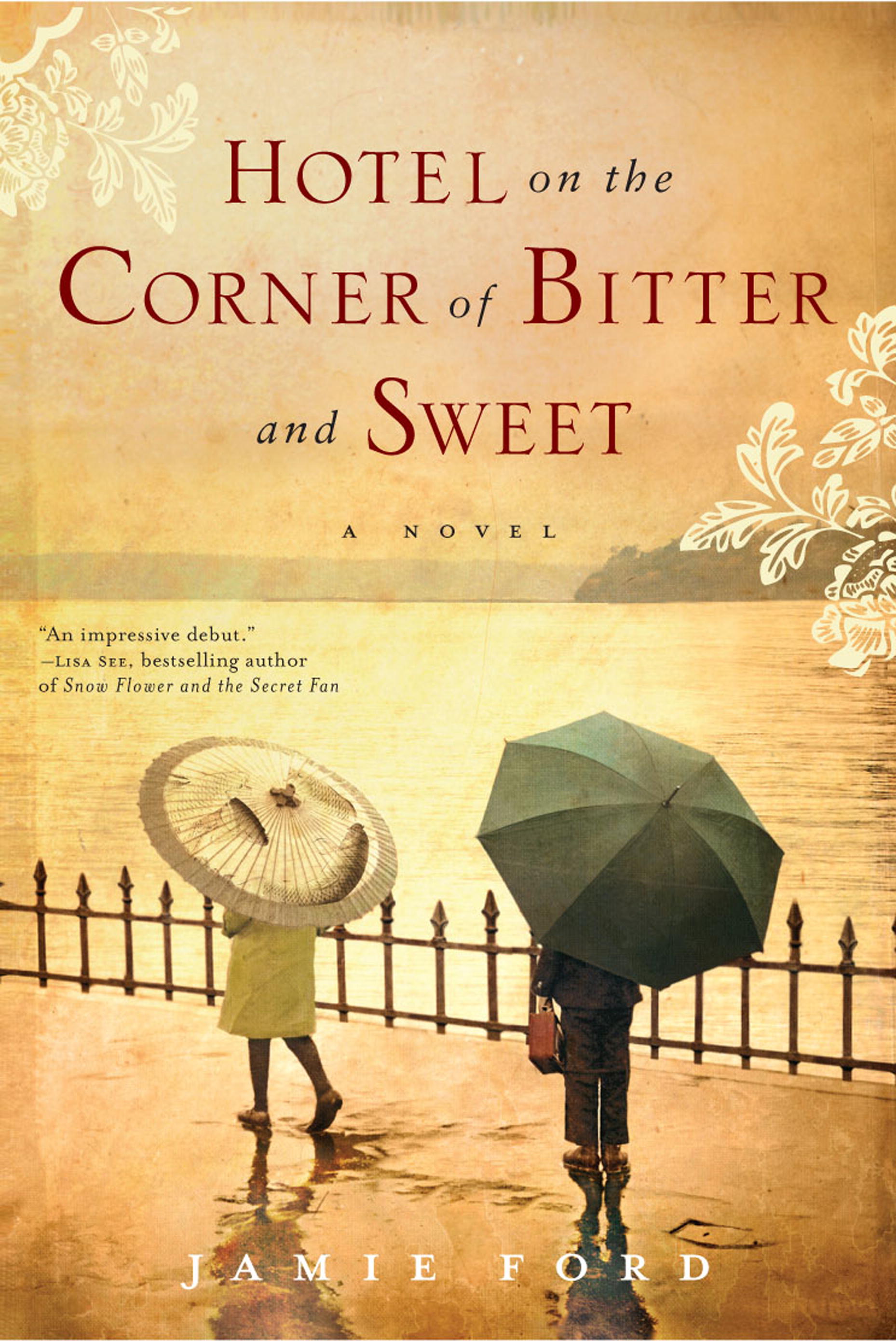
Hotel on the Corner of Bitter and Sweet by Jamie Ford (2009)

     It’s been a week since I finished Jamie Ford’s debut novel and my thoughts have been languishing in my edit box.  There is something about writing a review about certain books, good books, books that I really liked that make it difficult.  I don’t know why it is but I’m going to push forward and just do it! 

The story:

Henry Lee, a Chinese-American tells his story, alternating between 1942 and 1986, and his friendship with Keiko, a Japanese-American girl and the only other Asian student at his all-white school.  Keiko and Henry quickly become friends as they ward off bullies and work in the kitchen “scholarshipping” together. Henry’s already rocky relationship with his father quickly deteriorates as his relationship with Keiko grows.  Mr. Lee is a strong Chinese nationalist and Henry’s relationship with Keiko creates this chasm that can’t be healed between son and father.

In the alternating 1986 Henry deals with the death of his wife, Ethel and his estranged relationship with his son, Marty.  In the opening pages of the book, Henry still living in Seattle, finds himself in front of the Panama Hotel as the new owner announces unearthing Japanese-American artifacts from the basement of the hotel as they begin a major remodel.  Henry’s mind shifts back to Keiko and the events of 1942 when the Japanese community were taken to internment camps during WWII.

My thoughts:

 I loved the writing as the story came alive to me through Henry’s eyes.  It’s a story of a father’s love, even if misplaced and how children often do the opposite of what is expected.  It’s a story of young love and the thrill of being twinkle eyed about another human being.  It’s the story of our country at the worst of times, as we allowed ourselves to become irrationally prejudiced against citizens based on their race.  I loved how Mr. Ford used Henry’s relationship with Sheldon, an African-American saxophone player, to contrast the racial conflict already occuring for years in our country.  Japanese internment camps became our slave quarters of the second World War.  I enjoyed this book as much as Kathyrn Stockett’s The Help.
I’m not a fan of Amazon (more of an indie fan) but while scouting around for information on Jamie Ford I came upon this great little author video.-scroll down past the purchasing part to the vid. part.
Jamie Ford’s website-click here.

Highly Recommended-Adult Fiction
5/5 peaceful stars
**Support Your Local Library Reading Challenge**