Thanks and Giving

Gratitude is everything. I don’t feel great about the whole holiday experience surrounding conquerors and Indigenous people. In my vivid imagination I can see what a different world we might be in if only the “pilgrims” had learned from the people already living here on this land.

Greta Thunberg would be living a different reality. We might have created a much simpler life and people wouldn’t be thinking past gratitude to Black Friday. Or planning and prepping the copious amounts of food on this holiday and others as well. We’d eat what we needed and share easily with others.

I  feel passionately for the underdog and celebrating a holiday that represents a misguided look at history and what came after is wrong to me. I understand why Abraham Lincoln made it an official holiday (to bring unity to the nation during the Civil War)  but when we know better we should do better. 

Find ways to connect to the Wampanoag people because they welcomed and helped the first immigrants to survive. Make a donation this year to American Indian College Fund or the First Nations Development Institute. Read a book about Native life such as Braiding Sweetgrass by Robin Wall Kimmerer or books by Joseph Bruchac,  Kent Nerburn or Louise Erdrich.  Seek out Native authors and Native films. Think about what foods the real Thanksgiving might have had and give that a try. Branch out. Make fry bread or wild rice soup. Check out The Sioux Chef’s Indigenous Kitchen by Sean Sherman and Beth Dooley, the book or the restaurant in Minneapolis.   

This PBS article and video are worth exploring. I would love to go one day to Cole’s Hill to be part of this National Day of Mourning. Why can’t we give more land back because in the long run this land will help to save the earth. Returning Native forest land to it’s original intent over commercial property is a win for nature. Native Americans are a thriving community and once again we could learn from them. 

I’ve worked on this post on and off during November. Just having a hard time getting all the words out. I feel a turning in as the winter weather marches out and as my thoughts focus on Mother Earth it coincides with my mother’s health issues. I feel a snapping inside myself as time becomes stretched too thin. 

My hope is that everyone had a lovely time with family, connecting in a positive spirit and that gratitude was a guest at your table. 

We took a quick trip to Chicago to see the oldest daughter Kaylee and ate the most amazing vegan food at The Chicago Diner. Usually vegan and vegetarian people have a small selection (sometimes one choice)  on a average menu but here at the diner it was almost overwhelming as Kaylee put it because everything was an option and it all sounded delicious. Even our one meat-loving papa enjoyed his vegan Radical Reuben sandwich. 

What I’ve cooked: This amazing pumpkin soup from Cookie and Kate. I made it with canned pumpkin and it still tasted like all the goodness of the earth.

What I’ve read: I just finished The Children’s Bible by Lydia Millet and I highly recommend. It coincides so well with how I’m feeling right now. We, the children, are the caretakers and our children will be the radical change-makers.

What I’ve watched: Fell in love with Ted Lasso (totally late to the game here), trying to finish up Outlander because the book arrived on my doorstep the other day, and began watching the Shadow and Bone series with Groovy Girl because the Leigh Bardugo books were thrilling! 

I am grateful to each and everyone of my readers. I appreciate the comments, texts, and connections I’ve made through my posts. Peace be with you this month and into the next as we avoid more over abundance. Be well in spirit and mind. 

We are a diverse nation…

In simple terms white people came here with guns and took the land away from the already existing Native tribes. We rounded them up and shifted them to crap government lands. We broke treaties, we killed as if they were animals.  Native people were not blameless but what would you do if people tried to take over your land?  Fight back.  

White people also brought shiploads of Africans here to work plantations and we kept them enslaved for over 200 years on land that we stole from others and when that system ended we came up with sharecropping as a means to keep black people  poor and in their place. The list is long through our history of how we kept pushing. Some white people still feel like racism doesn’t exist and they still believe that a black person is beneath them. The officer Derek Chauvin feels that way; you can see it in his body language as he keeps his knee bent into George Floyd’s neck. I have trouble watching the video as most people do.  If you think first of other police officers or that All Lives Matter you are missing the big picture. Of course every life does matter but it is the inequality caused by skin color that we mean when we say Black Lives Matter.  
I am sure there are many exceptional police officers in this country and inherently in their goodness they should not be sticking up for Derek Chauvin or the other three. I don’t want officers to be killed and I also want all police departments to clean house. They should not be sheltering racist,  Nazi sympathizers, white nationalists,  power-hungry, violent abusive husbands or men with major anger issues. To fit our diverse world that many of us love and respect we need a police force of empathetic public servants ready to help out in our communities. Many already are successful at this but we still have far too many who would kneel on a man’s neck as a way to restrain and never bother to check on that person or to crash into a woman’s apartment in the middle of the night and shoot. We need to really think about what is important here.  If you do not like our diverse population than might I suggest you find another place to live, far far away where you are welcome. I want to live in an America where POC do not fear for their lives and we can truly work toward racial equality. 
While looking up the Minneapolis Police Chief I stumbled across their motto: 
“To protect with courage, to serve with compassion.”  I did not see courage or compassion as they shot pepper bullets and tear gas into crowds of people. I do understand about unions yet they are not meant as a shelter for bad people who break laws against humanity. And it just occurred to me it should be used as a teaching moment. If certain officers are interested in keeping their jobs they should be paired with members of the black or brown community to learn and grow. People can change if given the chance but it should not be at the expense of another human’s life. 
I started this post to discuss these two great books yet I couldn’t begin without speaking about these recent events that are overwhelming my being. 

One great thing to help students learn empathy is to put diverse books in their hands. I recently read two excellent books that feature Native characters.

I can make this promise by Christina Day (2019) : Edie has always know her mother is adopted but it isn’t until she discovers a box in their attic with pictures of a woman with her name that Edie wants more answers from her family. Day did a great job of integrating Edie’s history and the mystery behind the other Edith with day-to-day friendship problems. An excellent modern day Native American story. 
Quote: “The table falls silent, silent, as the sound-the singing-strengthens and rises. Waves lap against the shore, swelling with an incoming tide.  And out there, in the middle of the sea, is a line of-canoes. Paddles plunging into the water in brisk, even swipes. Voices harmonizing and bellowing in a language I’ve never heard before.” (p239)

The Marrow Thieves by  Cherie Dimaline (2017): Dystopian world showcasing the loss of white culture through their ability to dream (or lack of their ability) and their subsequent search for Native people to steal marrow from which tortures the indigenous people. Schools (assimilation boarding schools) were reinstated to keep groups together for medical experimentation. I hope this book is the first in a series because I would love to know more.

Quote:  We go to the schools and they leach the dreams from where our ancestors hid them, in the honeycombs of slushy marrow buried in our bones. And us? Well, we join our ancestors, hoping we left enough dreams behind for the next generation to stumble across.”

Happy Be Grateful Day

{Roger Williams on Smithsonian}

I have mixed emotions about this holiday. I don’t have any trouble being thankful and realizing ALL that I have to be thankful for but the celebrating of this particular holiday just reminds me of the horrors we inflicted on Native people then and still. It also seems like a ticket for overeating.  Do I sound like a humbug?  Yes I probably do.  I just wish the holiday was simple and not followed by a crazy shopping frenzy. So today I challenge you to think about what you are truly grateful for and to realize our lives are built on the backs of others. Read here for another look at Thanksgiving. And this young person perspective.

My Grateful 11:

My family; 5 of us make up a unique team of weirdness filled w/ humor.
My brother Jason; he is my family rock and pushes me to be more.
The elders in my life; mom, my in-laws, my stepmom and my dad in spirit.
Nature; thank heavens for parks of all kinds, places to hike and breathe.
Public education; may they one day be truly equal.
Public libraries; free books to borrow is a wonder.
Books and reading; I love to be transported.
Delicious food; well cooked, unusual ingredients and flavors.
My health; which is often rocky but I’m very lucky to be alive.
My lovely house; I can see a layer of dust over the floor but ehh-
Friends that bring me quiet times, good times, and laughter.

What brings you joy?  Celebrate that today. Fill your plate with the stories that are told around the table and find happiness in the people you are sitting with around the proverbial table. Reach out and think of the many marginalized people in your community.

October books

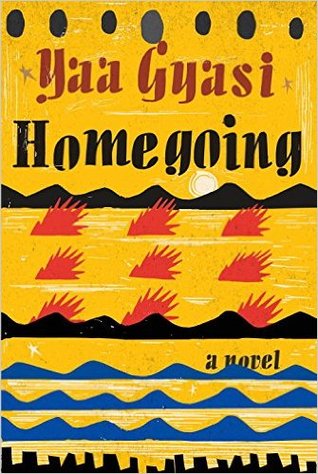
I read two excellent books this month; Yaa Gyasi’s Homegoing and LaRose by Louise Erdrich.  Both are family sagas retelling the stories of several generations. 

Homegoing traces two half-sisters born into two different villages at a difficult time in Ghana’s history. Tribes are busy waging war against each other and collecting slaves to make money and win favor from the white Europeans. 

Effia is forced to marry an Englishman and goes to live in the Cape Coast Castle. The marriage is a business deal arranged by Effia’s mother to bring fortune to the village and to push her daughter away from the village and her intended husband, the chief Abeeku so that she may have a more profitable life.

Abeeku stood up so that he was facing her. He ran his fingers along the full landscape of her face, the hills of her cheeks, the caves of her nostrils. “A more beautiful woman has never been born,” he said finally. He turned to Baaba. “But I see that you are right. If the white man wants her, he may have her. All the better for the village.” (15)

Effia’s half sister Esi is also promised in marriage to a man in her village. Her father is is a brave warrior, a Big Man, and she’s grown up in being adored by her family and community. One night warriors come to her village and she is told to run into the woods where she sits in a tree but is still found and with pelting rocks hitting her she falls to the ground.


She was tied to others; how many, she didn’t know. She didn’t see anyone from her compound. Not her stepmothers or half siblings. Not her mother. the rope around her wrists held her palms out in supplication. Esi studied the lines on those palms. They led nowhere. She had never felt so hopeless in her life. (43)

And thus both sisters’ fortunes are changed even as both are sold as product. Esi is chained up in the basement dungeon of Cape Coast Castle while her sister lives above. Eventually Esi is shipped off to work the American slave trade. Each chapter relays the tale of a descendent of each sister and in this way you are awarded this amazingly rich historical yet very personal account.

The New Yorker review (I liked it more than they liked it but it does a beautiful job of describing the era)

In LaRose Louise Erdrich gives the reader many parallels to Homegoing’s history. American English did their best to negate both cultures. LaRose, told mostly through the present, tells the story of Landreaux and Emmeline’s grief after a tragic accident kills their friend and neighbor’s son, Dusty. Through back and forth chapters we understand the depth of the grief felt by both couples and through side stories Erdrich interjects the history of Emmeline’s family and how tragedy and wisdom often walk together. The characters Erdrich brings to life are interesting and multidimensional. 


Outside the circle of warmth, the snow squeaked and the stars pulsed in the impenetrable heavens. The girl sat between them, not drinking. She thought her own burdensome thought. From time to time, both of the men looked at her profile in the firelight. her dirty face was brushed with raw gold. As the wine was drunk, the bread was baked. Reverently, they removed the loaves and put them, hot, inside their coats.  The girl opened her blanket to accept a loaf from Wolfred. As he gave it to her, he realized that her dress was torn down the middle. He looked into her eyes and her eyes slid to Mackinnon. The she ducked her head and held the dress together with her elbow while she accepted the loaf. (99)

Both novels illustrate the simple fact that women have been battling men for centuries. How brave and bold it is that we hope to raise our children to accept a different norm.  I know I expect my daughter to be strong and resourceful and I expect my son to treat all women with due respect.

We read LaRose for book club this month and I celebrated by making this Wild Rice Salad. It was delicious and I would make it again. I’ll read anything with Erdrich’s name on it-I love her young reader’s Birchbark House series-and read it with my school book club every year. One of my life goals is to read all of Erdrich’s stories and to make it to her Minneapolis book store.

New York Times review for LaRose.

Happy October!!

To the bright edge of the world by Eowyn Ivey

Eowyn Ivey’s writing is flawless just as it was in her debut novel, The Snow Child. I treasured reading each entry as I became more connected to the characters.

Colonel Forrester’s journey takes him away from his new bride, Sophie, and into the Alaskan wilderness to gather information about Native tribes and the land. Sophie had planned to go until she finds out days before departure that she is pregnant and won’t be able to make the trip. She is devastated but manages to find herself deeply immersed in photography and bird-watching. The book is told in alternating diary entry format with Col. Forrester, Lieut. Pruitt, photographer for the journey, and Sophie back in Vancouver at the barracks sharing with us in 1885 and Josh, Alaskan Native historian and Walt, Col. Forrester’s great-nephew who is interested in preserving artifacts from the trip that have been left in his possession in present day.

The expedition is far tougher than any could have predicted; both for Sophie and the Colonel and his men. Ivey’s words far outweigh my ramblings on the topic so let me share just a few passages so you may know the beauty of this historical novel.

Sophie Forrester
January 6, 1885

Oh, such amazing news! The General has granted permission so that I will accompany Allen and his men on the steamer north! for days now it has seemed increasingly unlikely, and I am certain it was only Allen’s steady, persistent resolve that has won me passage. Of course, I go only as far as Sitka and will return to the barracks the end of February; I will not even set eyes on the northern mainland where their true adventure will begin, but I am thrilled all the same. (17)

Lieut. Col. Allen Forrester
April 7, 1885

Like a salve to me, her letter. I waited as long as I might, but after this hard day of travel, I needed the comfort of her words.
For two months, I have carried this letter unopened in my breast pocket, yet I swear the pages are still touched by her fragrance. To read those words, written in her hand. ‘Our child.’

Sophie Forrester
May 14, 1885

I have been thinking of light, the way it collected in the rain drops that morning I was so full of joy, and the way it shifts and moves in unexpected ways, so that at times this cabin is dark and cool and the next filled with golden warmth.
Father spoke of a light that is older than the stars, a divine light that is fleeting yet always present if only one could recognize it. It pours in and out of the souls of the living and dead, gathers in the quiet places in the forest, and on occasion, might reveal itself in the rarest of true art. (202)

I could go on with many beautiful quotes from the text illuminating her perfect words.  Ivey’s books thrill me and I will happily recommend to all my book-loving friends. I anxiously await what ever she brings next. To the bright edge of the world I will follow…