Just being Audrey by Margaret Cardillo

Just being Audrey
(2011)

I smiled when I saw this lovely cover sitting on the new shelf at my public library.  Our oldest child (a jr at Oberlin now) has a love of all things Audrey and I love her also.  Roman Holiday is one of my favorite films.  Give me a quiet Saturday, a bowl of popcorn, and this movie and I’m set! Hard to believe it was her first film.  Audrey exuded grace and confidence during her life and is a wonderful role model. This beautifully illustrated biography shares Audrey’s spirit with everyone.

While I’ve adored her movies I’ve never read a biography about her and this picture book shares much about her life.  I did not know Audrey’s mother was a Baroness, that she lived in Brussels, or that her family hid during WWII?  The book explains how she changed her interest from ballet to acting and landed a few small roles when she met the French writer, Colette.  Colette thought she would be perfect for her Broadway show, Gigi, which is how Audrey landed in NYC.

Each two-page spread is illustrated with gorgeous drawings.  The text tells just enough to keep us interested with out tiring out young readers and the illustrations match each segment perfectly.
I’m so happy I picked this one up!

Find the author, Margaret Cardillo here.
Watch this simple video as it shares the outstanding artwork by Julia Denos and visit her adorable blog, The Cinnamon Rabbit.

Top Ten Tuesday; Top Ten books that make you think…

It’s been awhile since I’ve particpated in The Broke and the Bookish’s weekly Tuesday meme and as I mentally promised to blog more in September I’m jumping in.  There were several on her list that I completely agreed with.  

1. The Book Thief-Death as a character was an amazing point-of-view to read from.  This should be required reading at the high school level.

2. Revolution-I didn’t know much about the French  Revolution before reading this book and I had to do some research to make it all fit together.

3. One Thousand White Women-made me question my knowledge of Native Americans and our government.  Plus the whole book makes you feel like you are reading a true account and I kept having to tell myself “this is fiction, this is fiction…”

4. Along Way Gone: Ishmael Beah’s tale of his years as a boy soldier in Sierra Leonne.  I had to stop many times to readjust my ideas and attitudes toward the human race.  My husband lived in Sierra Leonne as a young boy and we shared many in-depth conversations about this country.

5. The Poisonwood Bible-Challenged my ideas of what a family and faith meant.

6. The Lacuna-like Revolution this book made me search for more information about the artists and the time period, opening up a whole new era for me.

7. The Red Umbrella-I learned so much about Cuba and what it was like for immigrants to settle here.

8. The Newman’s Own Organics guide to the good life-This was the first great book I read about being mindful of all that I did.  Simple things stuck with me like why preheat as the first step of a recipe.  Yes, we know that when baking something it is important to preheat but for cooking dinner there isn’t a reason in a world for that oven to heating up the entire time I work on a casserole in order for it to cook properly.  If you lean toward organic this is an essential guide.

9. NutureShock-Made me rethink  how I teach and how I parent; mind-blowing and well-written.

10.  Stiltsville-A brilliant novel that shares so many snapshots of our world; women, gay, rich, poor, married, divorced, difficult and happy that you can’t help but think more profoundly after reading this adult novel.

New Thinking

I loved my week at school-it was short and easy-such a perfect way to end our holiday break.  This week and into next I am reading Jan Brett and Karma Wilson books to 1st and kinder students.  2nd graders are learning about ABC books and we plan to  make one some how-I haven’t figured out the how-so if you know of a spectacular online (free) program that would create individual books with graphics let me know.

I did use this  alphabet organizer from Read, Write, Think as a mini project and we did it together using the Promethean Board.  It was a stretch getting them to think of one word for each letter that fit into their topic and it was a good way to begin but I want something I can import graphics into and make it into like an e-book for them.  I don’t need to print them out, too much paper waste but would like to share them using the board during parent night.   Any ideas?

In my forever quest for learning I picked this book up from the library after Janssen raved about it on her blog, Everyday Reading.

Po Bronson’s and Ashley Merryman’s book, NurtureShock has literally shocked me of many of my previous thoughts on parenting and as an educator.  Can Self Control Be Taught? is one chapter that I plan to use as a jumping off point to recharge the kinder experience in my library. This chapter discusses a pre-k program called Tools of the Mind; I’m fascinated with the idea of this play-based classroom where self-regulation is more important than trying to teach youngsters to read.  By learning to regulate their social, emotional and cognitive behaviors students take charge of their own learning.

While I can’t build this entire curriculum into my daily kindergarten classes I like the idea of pulling portions of it in and trying it.  One section of the chapter (162) describes how students study a topic by playing it out in all aspects.  The example given is that when you study fire stations they would then act out what they’ve learned about all aspects of a fire call from the family who makes the 911 call to the dispatcher who takes the call and on down the line.  By playing out the scene to its fullest students learn to work their brain instead of getting distracted.  At the end of this 45 minute play time the clean up song is played and students stop what they are doing and begin to clean up.

The idea of buddy reading is shared next-which I know our school does-but I don’t know about at the kindergarten level.  It says kids partner up and share their books by talking through the book’s pictures.  When my 4 classes of kindergarten classes rotate through next week I’m going to demonstrate buddy reading and let them do it all around the library.  I need to make ears and lips for this though as the listening child holds a set of ears and the reader holds a pair of lips.  I think I will make them on large Popsicle sticks form Hobby Lobby. Even though I’m not a fan of nonfiction I’ve loved reading this book; it takes me to a higher place (of thinking).

Three Unique Picture Books You'll Enjoy!

In between chapter books Groovy Girl and I have had the chance to explore three very cool books.  She is fascinated with Russia and chose to do a report on the country for school.  She brought this book home from her school library:

Russian Girl; Life in an Old Russian Town (1994) by Russ Kendall.  Meet 9-year-old Olga Surikovain in this nonfiction picture book and share a little of what her day is like.  Her family lives in the small town of Suzdal-150 miles east of Moscow.  The photos are lovely and Groovy Girl poured over them, trying to fully understand Olga’s life. Even though this title is “older” the information is worthwhile and shares a time in Russia’s history.  My paternal grandfather came from a small town on the Russian/Polish border and I love to see my girl explore these interesting roots.  The back of the book includes two recipes, an alphabet of Russian letters,and  a good list of Russian words and names.

Running with the Horses (2009) by Alison Lester.  This is a fictionalized version of an event that occurred during WWII; the rescue of the Lipizzaner stallions from the famous Spanish Riding School in Vienna.  Nina, a fictional young girl, works with her father, the stable master.  The academy has closed and the war comes closer every day.  Eventually her father and another stable hand, Karl, decide to take the horses across the border to her deceased mother’s parent’s farm.  The story is beautifully told and the illustrations are a gorgeous mix of pencil drawings and what look like photographs but may actually be paintings.

An Edible Alphabet; 26 Reasons to Love the Farm (2011) by Carol Watterson and Michela Sorrentino.  I LOVE this book.  Every page stands for something I believe in with all my heart.  It is a kid-friendly manifest of why we need to be eating locally from farms and our own backyards. It has snippets of healthy information swirled into beautiful illustrations.  I’ve already ordered it for my school library collection. On a personal note  I have an organic kid’s book on my computer with this same title-no kidding.  Guess I better get busy and finish it before some else writes the book.

happy reading!

Nonfiction Photojournals about Familes

Another piece of homework required for my recent class was a text set of books we might use to present a topic to students.  I wanted to do something startlingly different and picked non-traditional families with a focus on same sex, single dad, foster and multi-generational families.
I found three fantastic books that should be a part of anyone’s collection:

1. My Family by Sheila Kinkade with photographs by Elaine Little (2006)  This book is a project by SHAKTI for Children dedicated to teaching children to value diversity. Presenting families from around the globe with all we have in common; eating, living, learning and growing together as one human family.  This book makes the point that we are all one.  Told through beautiful photographs and easy text this is a great book to explore with students and their families.

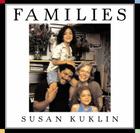
2. Families by Susan Kuklin (2006) This book highlights 15 families of various diverse backgrounds and how their family is special.  Several culturally mixed families are included and in their interviews,which are always the children, Osamu says  ” We’re a fun-loving, culturally mixed up family.  Mixed is more fun,” after he and his brother have relayed how much they enjoy being a part of both cultures of Japanese and American.  In an another interview Eloise ends hers by saying “We both love each other. That’s the most important thing in the whole, entire world.”  Eloise was adopted from China by a single mom and feels 100 % American.  Each story makes you feel a little more connected and realize that Eloise is right-families are made up of love and that is the most important ingredient.

3. Our Grandparent’s; A Global Album by Maya Ajmera, Sheila Kinkade and Cynthia Pon with a foreword by Archbishop Desmond Tutu. (2010)  This book shares the special relationship of grandparents in all cultures.  The special bond is explored and emphasizes what you can learn from this relationship.  Grandparents hold the key to where your family has been and how your parent was as a child.  This book is pure celebration of the joy between grandparents and grandbabies.

My mom was just here while I recovered from minor surgery and I’m happy to say she took great care in celebrating with her two grandchildren by cooking with them and getting them to help around the house.  Stuff they won’t do for me, she had them up and moving!  Go Grandma!!  Celebrate your family!

Reducing Your Foodprint; Farming, Cooking, and Eating for a Healthy Planet

by Ellen Rodger
(2010)
Energy Revolution Series from Crabtree Publishing

My husband loves bananas and I love pineapple! Both fruits require a lot of shipping miles and too many chemicals to grow. As this book explains, our foodprint is calculated by how farming practices and how far food has to travel to get to our table. Knowing this I choose pineapple as a delelicate treat to be savored and not purchased often.  My husband, as a runner, eats bananas everyday.  We do purchase organic when we can but even those have to travel miles and miles to arrive in our fruit bowl in Iowa.  It’s tough to consider how we can decrease our foodprint and become more earth-minded with our grocery money.  This book helps to raise awareness.

From the publishers website:
Reducing Your Foodprint teaches children that what they eat and how they eat is important to the environment. Most of the food served in restaurants and stocked on grocery store shelves travels many thousands of miles by airplane and truck. The further food travels, the more harm to the environment. This enlightening new book explains how to eat locally and responsibly. Special case study sections highlight how others have reduced both their carbon foodprints and footprints just by making changes in their diets.

Topics covered include Eco-Awareness, History of Cultivation, Food from Afar, Being an Ecovore, Eating Local, Green Cooking, and Fair Trade Food.  Ecovore, a new term to me, is described as” someone who shops , cooks, and eats with the environment in mind.  It is a term first used by cookbook author Kate Heyhoe to describe someone who makes sustainable food choices that are as environmentally friendly  as possible.” (14)  I’m going to add it to my vocabulary and find out more about Kate Keyhoe.

This book could be a great teaching tool but more likely will be used by eco-minded parents to open more awareness.  It would make a great Earth Day gift for a child.  I checked this one out from the library and will look for the other books in the series, Energy Revolution, for my school library.  Crabtree has lesson plans for the series.

To purchase a copy of this perfect book for Earth Day, click on the the title…

Reducing Your Foodprint; Farming, Cooking, and Eating for a Healthy Planet

Weekend Update; Library Loot

I had a meeting the other day at the library and because it started 30 minutes after my yoga class and they are right around the corner from each other-it left me about 20 minutes to browse at the library.  Browse quietly at the library by myself, she said with glee. 

I’ve become addicted to the NEW section of nonfiction, but specifically usually  just for cookbooks.  This time though I sort of did a swoop through all the nonfiction section.  I’m not a nonfiction reader, prefering fiction hands-down almost always but for some reason I found a ton of interesting titles this week.

1. The Locavore Way; Discover and Enjoy the Pleasures of Locally Grown Food by Amy Cotler (2009). This one has lots of tidbits and helpful advice.  As I paged through it there was plenty in there I didn’t already know so I had to bring it home.

2. Earth to Table; Seasonal Recipes from an Organic Farm by Jeff Crump and Bettina Schormann (2009).  I love good farm stories and this one has beautiful photos as well. 

3. The Power of Small; Why Little Things Make All the Difference by Linda Kaplan Thaler and Robin Koval (2009).  I liked the pages I read through and thought it might enlighten me a bit.

4. River House; A Memoir by Sarahlee Lawrence (2010).  A dad and his daughter build a cabin together in Oregon.  Proof that I miss my own Dad. 

5. Scout, Atticus and Boo; A Celebration of Fifty Years of To Kill a Mockingbird  by Mary McDonagh Murphy (2010).  This is a collection of interviews from authors and icons…Wally Lamb, Rosanne Cash, Rick Bragg, Tom Brokaw, Scott Turow, Adriana Trigiani and Andrew Young, just to name a few.  I read part of one chapter while standing and was intrigued.  Mockingbird is one of  my all-time favorite reads.

6. Johnny Cash; The Biography by Michael Streissguth (2006).  This wasn’t on the new shelf but on a music display.  We love Cash in our house and I thought Teenage Boy might enjoy this.

7. Legendary Homes of Lake Minnetonka by Bette Jones Hammell w/ photography by Karen Melvin (2010).  When I was a kid we boated on this lake (thanks, Dad) and now my brother lives near the lake.  I recognize some of the landmarks and enjoy reading about the architechture of these beautiful homes.  My mom was here on Saturday and it was nice to look through some of it with her.

Have you read any of these?  Which section of the library do you usually frequent?

While it was strange to not have one fiction book in my stack,  I am just about to finish Moon Over Manifest,  I have to finish The Glass Castle for next Monday’s book club and I have two books to read for my 5th grade book clubs so I guess I’m fiction-full as well.

Happy Reading.
Hope you’ve had a peace-filled weekend.

She Looks Just Like You! (Oh I hear that all the time!)

I remember the days when I had time at work or home to pull together extra minutes to write a book review. Hah!   We are experiencing a crazy schedule and I have to pick and choose what I can get done.

I did manage to finish reading Peter and the Shadow Thieves tonight after our church dinner celebrating Haitian culture.  I simply came home, laid down on the sofa and read.  I wanted it finished for my 5th grade book club meeting at school, which meets today,  and no way did I want to listen to 5 students discuss the ending without having my own insight.  Now I can shout it from the mountain top-Dave Barry and Ridley Pearson wrote an a thrilling sequel to Peter and the Starcatchers.  I wonder what Peter and the Secret of Rundoon is like….hmmm….must add to list.

But I digress because today I’m actually here to tell you about She Looks Just Like You; A Memoir of (Nonbiological Lesbian) Motherhood(2010)  by Amie Klempnauer Miller.  This is a “hot button” topic right now and one that I am firmly for-and I will gladly shout this from the mountain top as well- people should be able to love who they want.*

The description of Amie falling in love with Jane while they were both at a Midwestern college could mirror my own love story.   I’m probably preaching to the choir but my wish would be if just one person who is against gay marriage read this book with an open mind and had a change of heart would be mo.  It’s about people and love and justice.  I feel without a doubt that this is the Civil Rights struggle of the 21st Century.  Same-sex couples should have the same rights as heterosexuals, to marry, foster and adopt children and to share health care. Amie explains how frustrating it was to have to go to court to adopt her daughter. 

Amie and Jane’s love story and their decision to become parents after an 18 year relationship is personal, heart-warming and I recommend this book  for the story it shares. Okay, for her first book she does overwrite a bit-lengthy discussions and overly descriptive at times,  but it is her retelling.  Once Hannah is born the book made me laugh and cry because parenthood is funny and tragic all at once.

Nursing, late night trips to the doctor, over guessing every dang decision, worry added to more worry is what encompasses the second half of the book and that is the dream/nightmare most parents also experience. It brought back my nursing joys and baby love.   I nursed and hated weaning Groovy Girl.  Yet I was the one who wanted to wean her because she was old enough to ask for it on demand and Spring Break and summer loomed ahead and I knew I just couldn’t take it anymore.  Ahhh, the irony of it all! 

The difficult part about reading this book is “watching” Amie and Jane’s relationship crumble as they find their new roles as mom and mamma much more difficult than any parenting manuel can ever express. Thank you to Amie for writing a book that is honest about how hard it can be for anyone to be sleep-deprived, work full-time, try to write, try to placate your partner all while the child is wailing-it’s painful but well-told. 

My favorite movie this year was The Kid’s Are All Right, which has a similar theme of a longtime lesbian couple (Benning and Moore) with children and the children choose to meet their sperm donor father.  It is realistic and hilarious! 

Amie Klempnaer Miller’s website and blog-keep up with the family!

A random quote:

“Pregnancy slaps you in the face with the knowledge that much of who we are is defined by our bodies.  On a daily basis, Jane is becoming less self-sufficient.  Her growing stomach limits the clothes she can wear, the things she can reach, and the spaces she can fit into.  Hormones course through her veins like hallucinogenic drugs, making her drop things, forget what she is saying in the middle of a sentence, and gag whenever she tries to brush her teeth.  Her body is hot and tired and beginning to swell.  And now she is surrounded by a room full of even hotter, more exhausted, and more swollen women, like perverse Ghosts of Christmas Future, presenting vision upon vision of what she will become.”  (80)

Other thoughts:
Emily reviews it at What All the Cool Kids Are Reading…

I found my copy on the new shelf at my local library!

*disclaimer-understand this to mean I don’t consider small children or young adult children to be love interest candidates for adults.  I’ve heard this argument before and clearly I know the difference between consenting adults who like each other or fall in love.  Often we don’t pick who we fall in love with-it happens.  I happened to have fallen in love with a tall, brown-haired man who slurps his cereal and drives with his knee.    I still love him and find him incredibly sexy most of the time!

Do you feel GLBT can be good parents/partners?  Let me know in the comment section…

Vanishing Cultures-Nonfiction Series

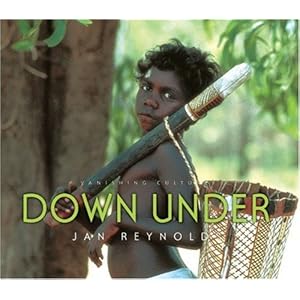
  Vanishing Cultures is the series title for seven books by Jan Reynolds and all  with beautiful covers. Each book showcases an indigenous group and highlights their close relationship to their surrounding environment.  With gorgeous photos and easy text these are fantastic books to share with any age child. 

    Frozen Lands begins: “As the sun sets on the edge of the frozen shores of Qumanituaq, a large inlet of Hudson Bay, Kenalogak asks her grandmother for one more story. They hurry to prepare tea before the chill of darkness comes, and Kenalogak’s grandmother begins her tale.” (p. 1-2)  Inuit history is shared as well as day to day life for Kenalogak’s family. They depend on the caribou, their snow dogs and a shared respect with the natural world that helps them  survive. Kenalogak and her brothers learn how to build a new igloo from their father and it only takes the family about an hour to build it. I think kids of all ages would find Kenalogak’s life fascinating in the frozen land of the Canadian Arctic.

    Down Under shares the aborigines Tiwi tribe who live on an island just off the coast of Australia. It begins: “Far down under, the bright sun sets over one of Australia’s tiny islands. Inside a ring of small fires that keep wild animals away at night, a young aboriginal girl named Ampenula whispers to her mother, asking for one more story. She curls up close as her mother begins her tale about their tribe, the Tiwi.” (p1-2) Amprenula talks about dancing your own Dreaming and how it brings her closer to the land. As the tribe travels from place to place they hunt for food in the trees as their ancestors did before them. They catch a bandicoot and a large carpet snake in the book. Kids will love the close up photos of the snake as it is pulled from an old log.

     Both books show children and adults in native clothing, which in the Tiwi tribe (naturally) means less clothing.  While noone is naked per se there are photos of nealy naked children and the backside of a woman wearing just a skirt.  My girl asked honest questions about this as would kids in a school setting-kids in a school setting might giggle a bit about this but it wouldn’t keep me from sharing the story.

    This whole set would make a great addition to any collection but would be especially perfect for a cultural study.  My friend Tina at Books Are My Thing! is posting about two other titles in this series.  Please travel over to her blog to check out what she has to say!  I thought there were only four titles in the series (our public library only had four) but now that I know there are seven I’m anxious to read the other choices.  I loved the connection to the environment each book made a point to share-it is important to realize as we advance our own culture, other cultures would prefer to stay as they have for centuries.  Jan Reynolds reminds us how important it is to respectfully allow them to live in their preferred manner.


Check out this pdf file to use with this series.
I realized while researching this author that she wrote another nonfiction title, Cycle of Rice, Cycle of Life-reviewed here by me.  I found an interview with Reynolds at Lee and Low Books about sustainability.

Nonfiction Saturday

Well, all my great library books are due today so here is my quickie review of the top three fantastic nonfiction books peaceful girl and I picked out.

What’s Inside? Fascinating Structures Around the World by Giles Laroche (2009)
Includes a great glossary of each structure.

This is such a cool book for any child who loves to explore.  Each page opens the door to the amazing discovery on the next page.  Like this:  King Tut’s tomb is hidden underground(shown on the opposite page),  but this brightly painted building was constructed on the rocky crest of a hill so it could always be seen silhouetted against the sky.  Monumental rows of Doric columns support triangular pediments at each end and surround a sanctuary that shelters a statue of this Greek city’s namesake.  What’s inside?  Turning the page you discover an ivory and gold statue of the goddess Athena!  Along the left side of the page are specific details about each structure.   The Guggenheim Museum in NYC, a Shaker dairy barn in Massachusetts, and the Sydney Opera House in Australia are just a few shown.   Wild Rose Reader has a more extensive review-click here-as well as an interview with Giles Laroche.

If Stones Could Speak; unlocking the secrets of Stonehenge by Marc Aronson with the generous cooperation of Mike Parker Pearson and the Riverside Project. (2010)  This is as much a story of the mysterious Stonehenge structure as it is a look at archaelogist Mike Parker Pearson.  Aronson tags along with Pearson as he guides a tour around Stonehenge.  I would love to see these boulders placed in circle formation more than 4,500 years ago but in case I don’t make it this book gives a really close look at the types of rocks used, where they came from and the many theoriesof  how it all came to be.   This is a fascinating detailed look for budding archeologists.  Includes glossary and timeline as well. Another review is here at  Shelf-Employed .

Circle of Rice, Cycle of Life; A Story of Sustainable Farming by Jan Reynolds (2009)
This is a very detailed and lovely look at the cultural and environmental aspects of traditional Balinese rice farming, a model of sustainable food production.  Everybody eats rice-every culture-but this book shows how the island of Bali has coordinated life around the rice cultavation.  Because the Balinese were so adept at sharing water and growing rice, the Indonesian government decided (red flag) Bali should produce more rice.  They provided Bali farmers with a hybrid rice-set to grow faster and produce higher yields and the farmers were told to ignore their ancient water schedules and integrated systems of field rotation.  Bali’s rice production suffered under these new practices.  “This type of chemically enhanced agriculture was not sustainable.  It could not maintain healthy, abundant crops of rice year after year, even with the aid of chemical pesticides and fertilizers.”  Eventually farmers were able to go back to their system with the help of anthropologist, L. Stephen Lansing from the University of California.   This book is a wonderful tool to build understanding on how sustainable agriculture affects every form of life.  Fabulous photographs are included as well as a glossary and pronunciation guide.
Have fun exploring these interesting and informative titles.
Enjoy!