Caste: the origins of our discontents by Isabel Wilkerson

 I finished this after 4 months. It just wasn’t a book I could rush and I needed to take a break after sections to think about it ALL because there is so much in here. I very much enjoyed her writing style.  At almost 400 pages and seven sections long the book dissects all that you would ever need to know about the social construct of the caste system in these United States, Nazi Germany, and India.  I only want to present a few highlights that stood out to  me. I encourage anyone interested in understanding better how the conquering men stole the land, crushing the original inhabitants, and built this country up using enslaved people from the continent of Africa. 

“Colonial laws herded European workers and African workers into separate and unequal queues and set in motion the caste system that would become the cornerstone of the social, political, and economic system in America. …triggering the deadliest war on U.S. soil, lead to the ritual killings of thousands of subordinate-caste people in lynchings, and become the source of inequalities that becloud and destabilize the country to this day.” (41)

For slavery to have existed here in the “land of the free” is horrid enough but after the Civil War was fought collectively people and our government should have stood up for actual freedom. Civil War generals should have been put on trial in the North and been tried for treason instead of celebrated. Freed slaves should have been offered education and training instead of sharecropping.  Even as they fled north they were given minimal opportunities. Jim Crow laws continued this mindset and paved the way for the equity issues we struggle with today. 

Wilkerson shares many personal stories of racism from her own life and of others that help to shine a light on the difficulties black and brown people experience daily. People from the dominate caste feel they have the right to dictate, bully and get involved in situations that have nothing to do with them. She shares a story of her encounter with a plumber who isn’t interested in helping her find the source of her wet basement until she humanizes the situation for him and about airline attendants who doubt her first class status. 

 I read each word, each sentence, each chapter slowly as to fully absorb the emotion and meaning I often had to walk away from the book to regain some composure. While it is brutal and often left me chilled; this book is a must read for anyone seeking enlightenment on how we got here.  Understanding the why is important. We have got to do better. My biggest take away is that we have to step in and say something as these situations happen both on a grand scale for racist policies and on a more personal scale to the Karens we encounter. 

Year of the woman

For February and March I’ve shared important women and POC like Bessie Coleman, Harriet Tubman, Mae Jamison, and Rosa Parks with all my library students. We’ve read books like  The Oldest Student; How Mary Walker learned to read by Rita Lorraine Hubbard and Oge Mora and Counting on Katherine; how Katherine Johnson saved Apollo 13 by Helaine Becker. We’ve discussed men such as Thurgood Marshall, George Washington Carver, John Lewis, Sammy Lee, and Henry “Box” Brown. 

Invariably one of my older students will ask why isn’t there a men’s month? My answer sounds something like … Well we live in a a patriarchal system and white males predominate in every field available except perhaps education and you’ve studied American history from a white lens. You learned about our white “founding fathers”, explorers, scientists, and inventors in school using a text book that generally gives an age old slice of approved information and it’s up to you to seek out a more well-rounded view on everything. And it’s my job to help you see things in new ways through research and exploration. 

It’s hard to know how far to take it; I don’t want to overwhelm my students yet I want to push them enough to look outside their predominantly white community at the larger world and see others with compassion, as humans. 

Other resources to explore: The Black History Channel and the History.com’s Women’s History 

With our first female vice president it is more important than every to help all our students understand how important these achievements are and we need to keep pushing for more. 

December thoughts

 I recently finished an amazing book, The Overstory by Richard Powers. I completely understand why it was a NYT bestseller and winner of the Pulitzer Prize in Fiction for 2019.  The book is startling good, crisp literature.  It was intriguing to follow nine distinct characters all in their own stories to find how they all connect in some way or another.  I love trees, am a known tree hugger, and get riled up by people who don’t care about simple things like one use items that just get tossed away so this book spoke to me on the level that all our actions should lead us toward a greater good. I’m not a fan of paper napkins, paper towels, cardboard coffee cups, and small plastic beverage containers even though some of this is recyclable or composts naturally as paper does but why buy consumables that are just to be thrown away? It’s just me, I get it, most people don’t think about these things at all. I believe that in certain areas of the country clear cutting forests for profit may be changing as public opinion, research, and natural disasters like mudslides show how groves of trees benefit our habitat as well as animals. Richard Powers does an amazing job of helping us to see the connection between trees and other living beings. “They stand under the circle of camouflaged Platanus, that most resigned of eastern trees, on the spot where the island was sold, by people who listened to trees, to people who cleared them.” (451)  I will remember and treasure the message in the book for a long long time. 

I’m also one and a half chapters away from finishing Ibram X. Kendi’s NYT’s bestselling book, How to be an Antiracist, which I began way back last February. I’m not good with nonfiction. I started reading it with a teacher group through Facebook but I slacked off about chapter 12 and then I was invited to join another book group with two friends and that motivated me to push me through to (nearly) the end. I appreciate Kendi’s writing and his willingness to share his own story with mistakes and racist ideas.  It’s a lot of unpacking and deep thinking and probably a book I will refer back to as I continue to understand our journey better. 

Now as I stay up past my bedtime to write I am mindful of my sleep issues. For eight long years I have struggled with insomnia and waking up in the middle of the night unable to go back to sleep. I don’t feel stressed, I’m in good overall health, and I practice meditation and yoga, drink tea, and generally am not on screens at night. Recently a writer on Twitter that I follow mentioned her own struggles with sleep during menopause and I literally heard an Hallelujah choir sing as I read her comments and others over this issue. I’ve battled this for so long without real understanding from the medical community and found no similar experiences when I discussed it with other female friends! In just one small social media post I felt relief to know that I was not the only one. Thank you Jo Knowles; your simple statement gave me relief, still no solution, but maybe that’s somewhere close at hand as well. Life affirming changes happen through books and even small snippets on social media!  

Are we ready?

For school…

Yes and no. I’m excited to see all my student’s faces even if behind a mask, I will be happy to hear their voices, and read with them. I am anxious though about teachers and staff getting sick, and the busy crazy schedule for classes. So many regulations and I plan to follow but during our week day on Friday I walked out of the library twice without a mask bc I was busy and thinking about next steps not Covid-19. I’ve been careful this summer.  I’ve worn a mask, limited my friend circle, had fun outdoor adventures, and I don’t want all that careful time to change. I need to come to grips with staying safe inside school with lots of little bodies. It’s going to be a year; unique and filled with joy. Plus my Groovy Girl will be gone having her own school adventure, also trying to stay safe and finding joy on her college campus. 

I recently finished two fantastic fiction books and as usually I still have stacks and stacks to read still. I never get all the books read that I bring home.  My stack this year took a hit because after George Floyd’s murder I swerved off my regular reading and picked up lots of current books that had BLM as a theme which means I’ve read a lot of powerful books this summer and these two are no exception.


From the Desk of Zoe Washington (2020) by Janae Marks: Zoe finds a letter from her birth father on her 12th birthday and she opens it.  She’s never met him and she has a stepdad and her mom who love her very much yet something is missing-so she opens the letter, reads it, and hides it. Inside the letter her dad sounds so nice and she didn’t think a criminal, a murderer in fact, would sound so good. Zoe decides to investigate with her next door neighbor – friend  Trevor and the two set off on a quest to help her dad prove his case. This book brings up the idea that not everyone in prison is guilty and that sometimes people are convicted because it’s easy. I hope Janae Marks writes a continuation because I would love to read more about Zoe and her adventures.


Prairie Lotus (2020) by Linda Sue Park: Wow! This historical fiction book blew my mind a little and I appreciate Park’s writing and research. Park’s was enamored with Laura Ingalls Wilder series Little House on the Prairie, reading them over and over.  It wasn’t until later that she realized the racism that existed in the stories. Inspired to write her own version she sets her story in the Dakota Territories in 1800.  Hanna and her father are running away from her mother’s memory in San Fransisco and end up in small town LaForge City. Hanna is half Chinese and knows how people feel about her. Everything from her father’s attempt to open up a small dress shop to her ability to go to school with other children from the prairie are hindered by how people feel about her. The racist aggression she feels from townspeople is softened by the simple fact that some people do accept her and she makes a few friends and changes a few minds. 

My mantra this year will be Focus on the positive.  Keep reading, keep smiling.  

More on being anti-racist…

I am continuing my journey to better understanding by watching and I want to share the most interesting with you.  We should keep learning and pushing ourselves while we actually work to dismantle the racist systems in place that keep people of color from succeeding at life. We need to push our schools, banks, city councils, police departments, landlords, and neighbors to do better. If you work in an area that should help more get your people on board.  If you are a parent, teacher or administrator you need to push for real change in what and how we teach. This video shares how students in the South were explicitly taught to respect the Confederate flag, and it’s so-called “heritage”.

Also I read this great article, When black people are in pain white people just join book clubs, by Tre Johnson in The Washington Post about how easily white people dismiss the struggle. I feel like I’m stuck in this myself by how much information I’m taking in yet in order to be a better ally and teacher I have to understand how and what to say. I was asked to be on our district’s equity committee, which I understand has been in place for years w/out getting much done, so we are still dealing with a lot of old/same hurt, outrage, and anger.

Teaching Hard History in K-5 is a webinar I watched from the Teaching Tolerance website, which is filled with valuable resources. This webinar already took place but if you register they will send you a link to it within a few minutes. I’m going to keep an eye on other webinars they may host as I would like to be part of the real-time Q/A

This video with Emmanuel Acho is helpful and he has several others to watch. I either stumbled upon this one or someone shared it on their FB feed.  It’s shocking that people still don’t understand the mental trauma and racist systems that Black people have experienced. This is one of many areas where the race has not been fair for generations. I encourage you to subscribe and take a look at each of his videos.

And one last one that I found on our list of resources for the school equity committee about micro aggressions. I love the dialogue that happens in this particular classroom. My head cannot wrap around things that people say out loud; like stop people and think before you speak and also how about a little mind-you-own-business! What would it look like to be more welcoming and accepting of people who don’t look just like you.

Be kind out there and seriously do better. There are many ways to get involved and help even if just by donating or making phone calls. 8 can’t wait is a great tool to help you. Breonna Taylor’s murderers are still out there and here is a good article talking about this. And Elijah McClain in Colorado. We need to stop this before the list continues to grow…
Thank you for continuing on this journey with me…

We need diverse books

I heard some guy interviewed on NPR today discussing recent events in Charlottesville, VA. He ended the discussion with an admonition that everyone should invite a family of a different color, religion, belief system over for dinner; that through personal interactions such as a simple family meal we could end racial strife.

It sounds good. And I do have diverse people to my house for dinner. I want to know who’s going to volunteer to have the neo-Nazi family over though?  Not me. Maybe I would IF I thought I could magically unwrap their hatred.  I’d rather have Tina Fey over for dinner though and I’d serve a sheet cake at the end. And then we’re just preaching to the choir.

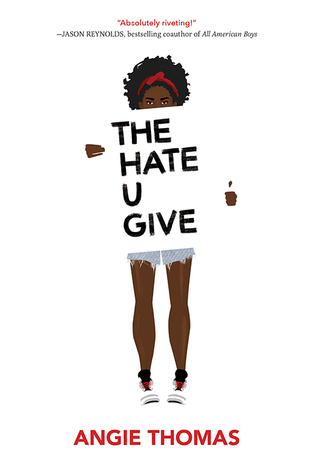
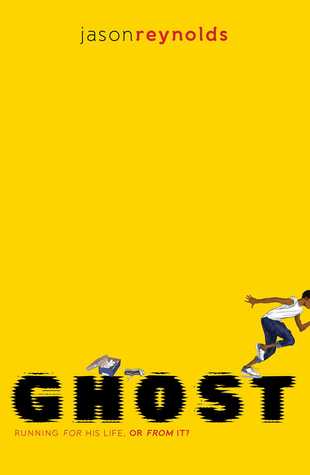
Quite awhile ago (before the election ended so tragically) I ordered a stack of books from Amazon.  I’d read a review about Angie Thomas’ new book that enticed me and two other books were suggested to me by that handy Amazon tool.  In a rare moment of frivolousness I ordered all three-very unlike me. I read The Hate you give pretty quickly and LOVED it. I promote it all around town and on twitter. Loved it. She wrote an interesting story with genuine characters on a timely topic. The second book was Renee Watson’s book Piecing me together; an excellent coming-of-age tale about tough choices and being yourself.  I discovered I had an ARC of an earlier Watson book, This side of home, about a set of twins coming into their own as separate young women, which I then devoured as well. The 3rd book took me a bit longer to get to-I don’t know why-but it set on my dining room table for months. I packed it for vacation though and read it on the road. Ibi Zoboi’s American Street.  Unlike the other three this one is not about the black experience in America but a Haitian immigrants experience as a young high schooler trying to learn how to be American amidst family strife.  This one I enjoyed yet I struggled with decisions made and lack of consequences for Fabiola’s cousins.  I look forward to other stories she may have to tell. Another one I just finished that can be added is Ghost by @JasonReynolds83, a powerful tale about a young man trying to make good choices in his life.

In an attempt to explore new human experiences any of these titles would fit the bill. Feel free to invite them to dinner, follow these authors on twitter, and pay attention. I believe in the library but buying diverse books sends a message to publishers: #weneeddiversebooks


@acthomasbooks
@reneewauthor
@ibizoboi

29 days of book love…

A classic collection of poems by a master of American verse
Selected Poems of Langston Hughes
This book contains a selection of the poems of Langston Hughes chosen by himself from his earlier volumes. 
I bought this book years ago while I was student teaching.  I used it to teach at a difficult high school with struggling students.  Some of the students got into Langston, some of them were bored, and one student fell in LOVE.  He’d never heard of Langston and was amazed-truly-to discover a black artist with such talent. It was a good moment for me as a young teacher to see the light shine in his eyes.  
Harlem Night Song
Come,
Let us roam the night together
Singing.
I Love you.
Across
the Harlem roof-tops 
Moon is shining.
Night sky is blue.
Stars are great drops
of golden dew. 
Down the street
A band is playing.
I love you.
Come,
Let us roam the night together
Singing.
I think he has an interesting eye, poetic sarcasm, and the ability to say it like it is but in beautiful verse.
Democracy
Democracy will not come
Today, this year
  Nor ever
Through compromise and fear.
I have as much right 
As the other fellow has
To stand 
On my own two feet
And own the land.
I tire so of hearing people say,
Let things take their course.
Tomorrow is another day.
I do not need my freedom when I’m dead.
I cannot live on tomorrow’s bread.
Freedom 
Is a strong seed
Planted 
In great need.
I live here, too.
I want freedom
Just as you.
Sadly Langston’s poems still resonate today as relevant not historical. We need to consistently be working on the racism that prevails in our country. Today. Now.  We can’t wait for future generations, we can’t let more young black men or women die just because of the color of their skin.  
His poetry is powerful stuff.  This is the book I pick up when I need some inspiration.

What an amazing day.

I spent two hours at a local church surrounded by volunteers, kids, and parents all wanting to do something to celebrate Dr. King’s memory. Groovy Girl wanted to spend the day playing with a friend and I wanted to check out the service day event so we compromised peacefully.  We picked her friend up and attended the event together. They tied fleece blankets for a local women’t shelter, they frosted cookies for  another organization, and they wrote letters, and drew pictures for the  military.  It was a joint effort between the Extension office, a volunteer group, and the church. 

I heard many kids and adults ask if this event would happen again next year and the answer was yes although looking to the closer future the director for the voluteer group said she would like to do a few activities over the summer.  Groovy Girl was not too happy to leave the house for the event as it is FREEZING here but she had fun with her friend and she ran into several other kids she knew.  She is the soical butterfly of our family and easily moves from activity to activity with out a worry as to where I am. 

There were more kids there than they expected so the activities went faster than they had planned.  The girls thought they would be actually making cookies not just frosting them and think that making cookies at home would be just the perfect way to end their playdate.  I love that Groovy Girl considers cookie baking a fun activity and is a bit snooty about the store bought variety; not that she’d turn either down but she appreciates a good homemade version.  For now though they are happily upstairs surrounded by American Girl doll clothes having a peaceful day indeed. 

Watch Dr. King’s “I have a dream” speech hear and read this interesting Wikepedia article about the struggle to make his birthday into a national holiday.  I know that I carry out King’s dream every day at school as I work to help students through education as well as a personal relationship with students that need a little (or a lot) extra kindness in their day.  Let freedom ring…

I haven’t even focused on the inaugaration of President Obama today and I will later when my writing time is over.  Maybe we can watch the event as we make cookies.

And how have you spent your day…?